
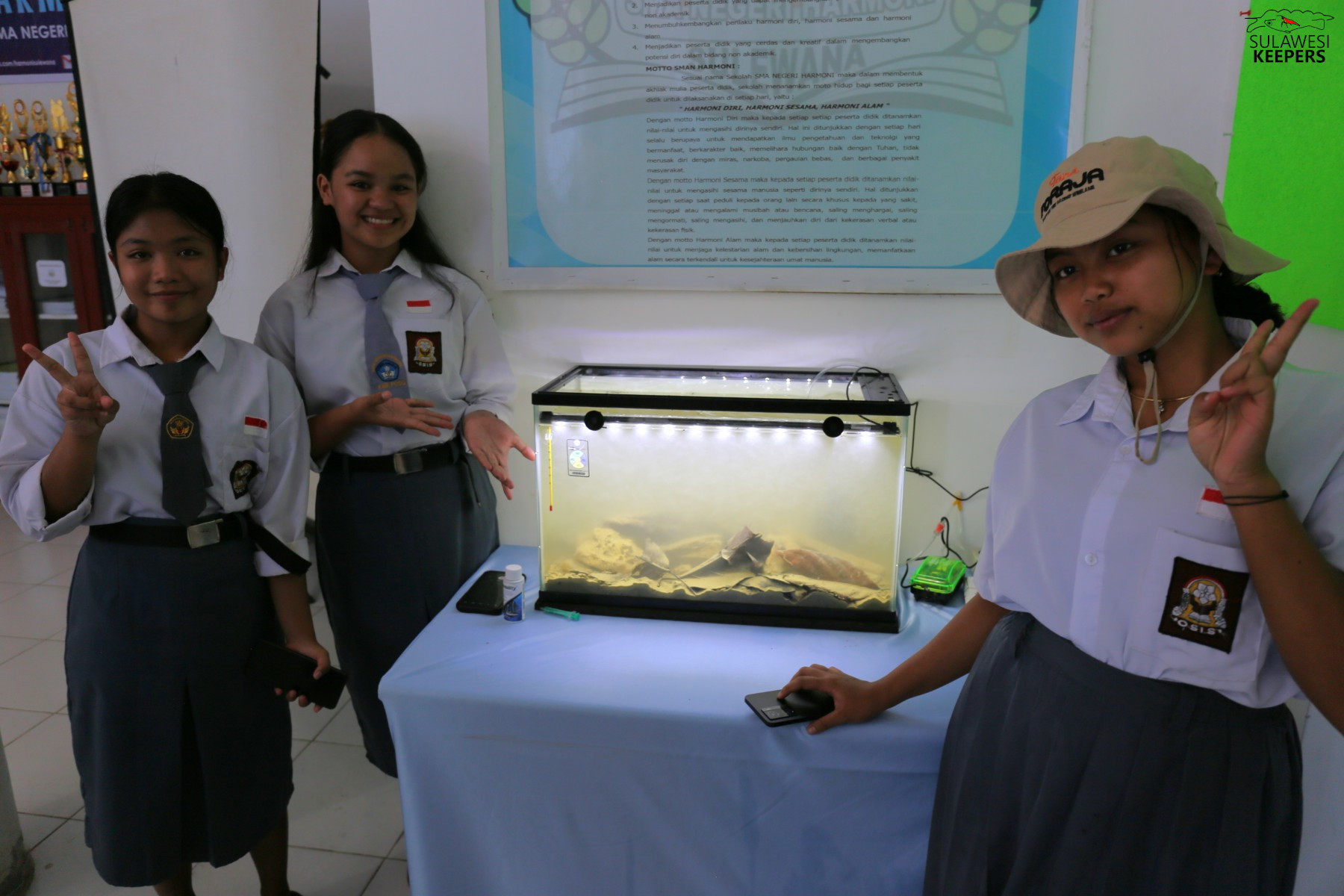
We believe that observing an aquarium and caring for it can change the way people perceive the world. This is especially true for children! That is why, after careful consideration together with our local partner Institut Mosintuwu, we donated an aquarium to selected schools. But of course, it was not just about the aquarium…
The children who were to take care of the aquarium later spent several days with us on the lake and had the opportunity to gain their own experience with the conditions that the animals require. This was important so that they could later connect the animals with the lake and perceive them as an integral part of their environment, to which they are perfectly adapted. Taking care of aquarium creatures is not easy, and this knowledge will help children understand that fragile life cannot simply be transferred elsewhere or recreated in alternative conditions. Taking care of the environment is absolutely necessary.
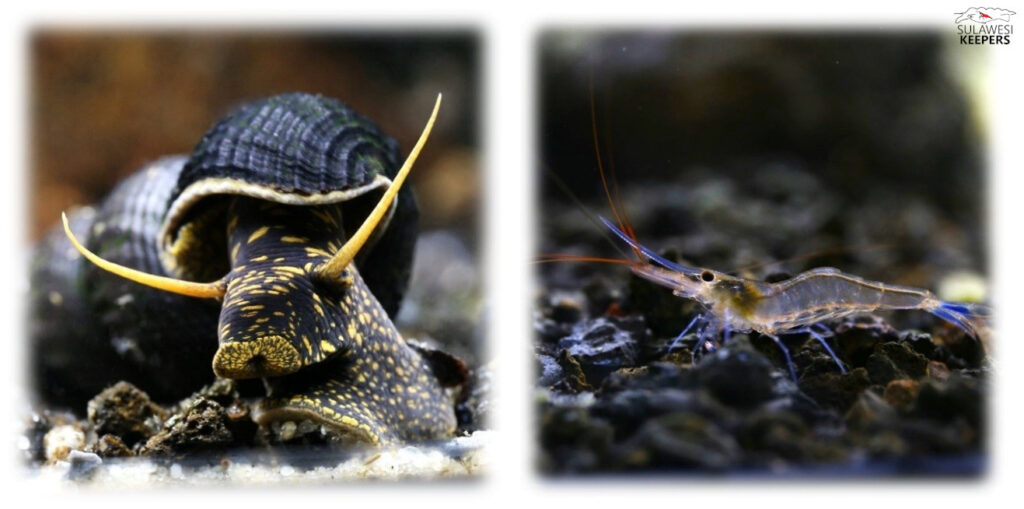
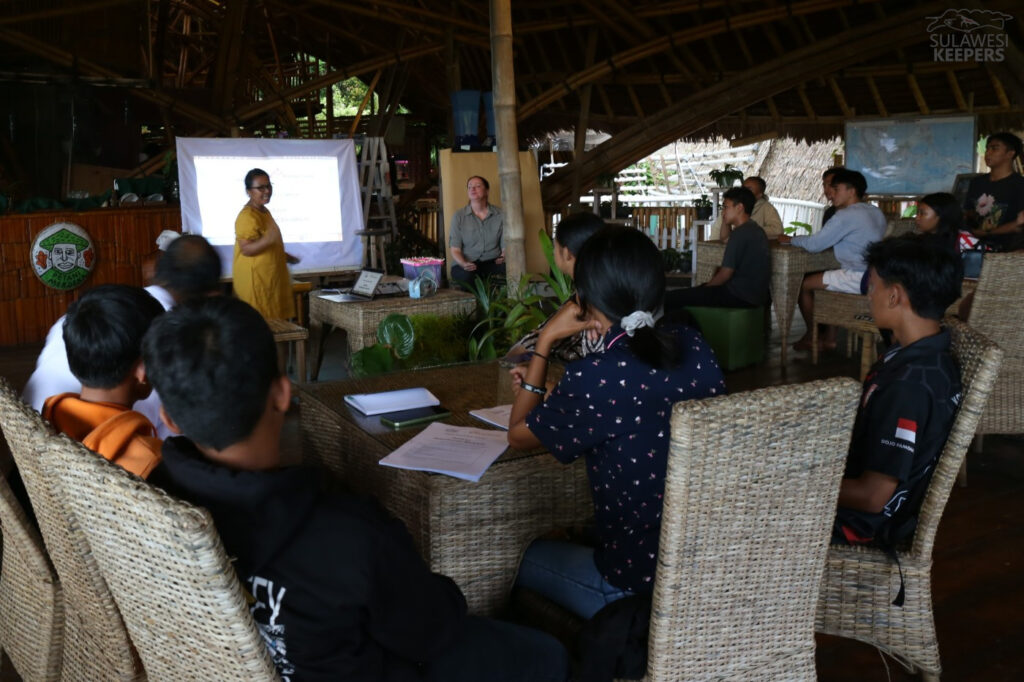
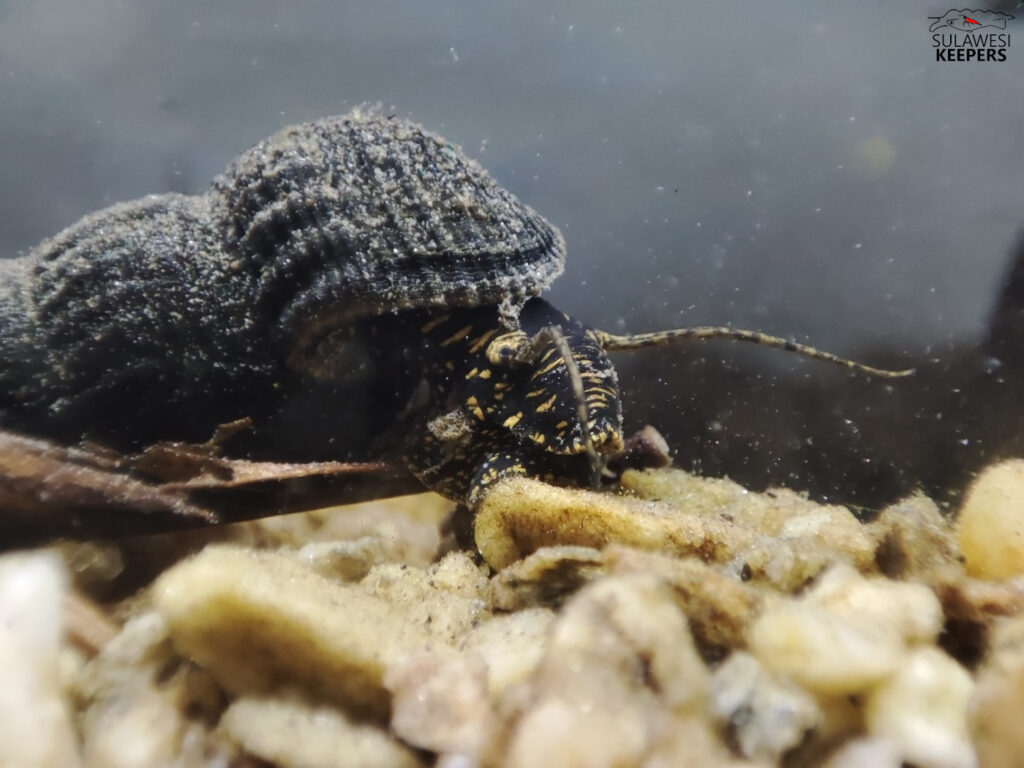
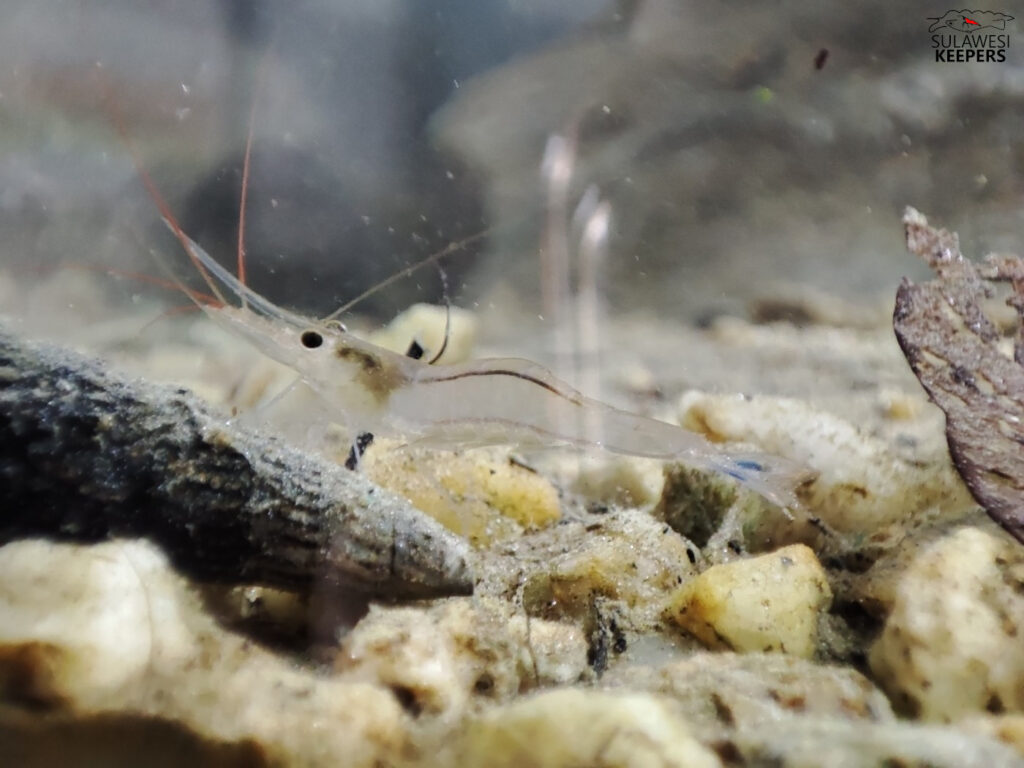
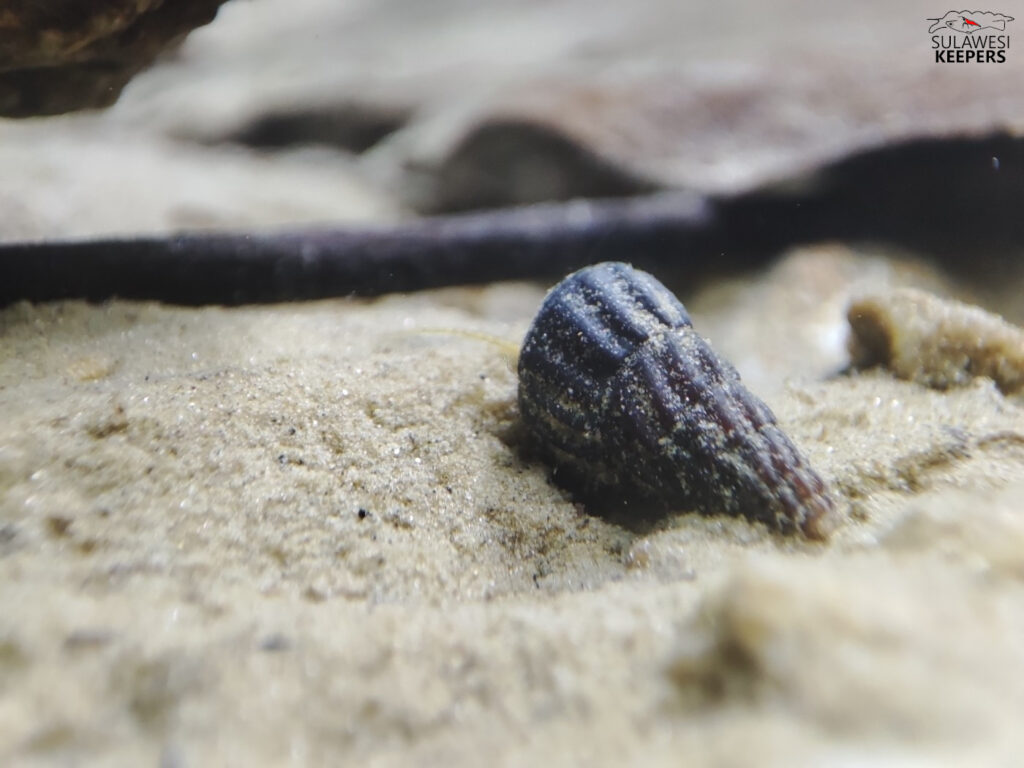
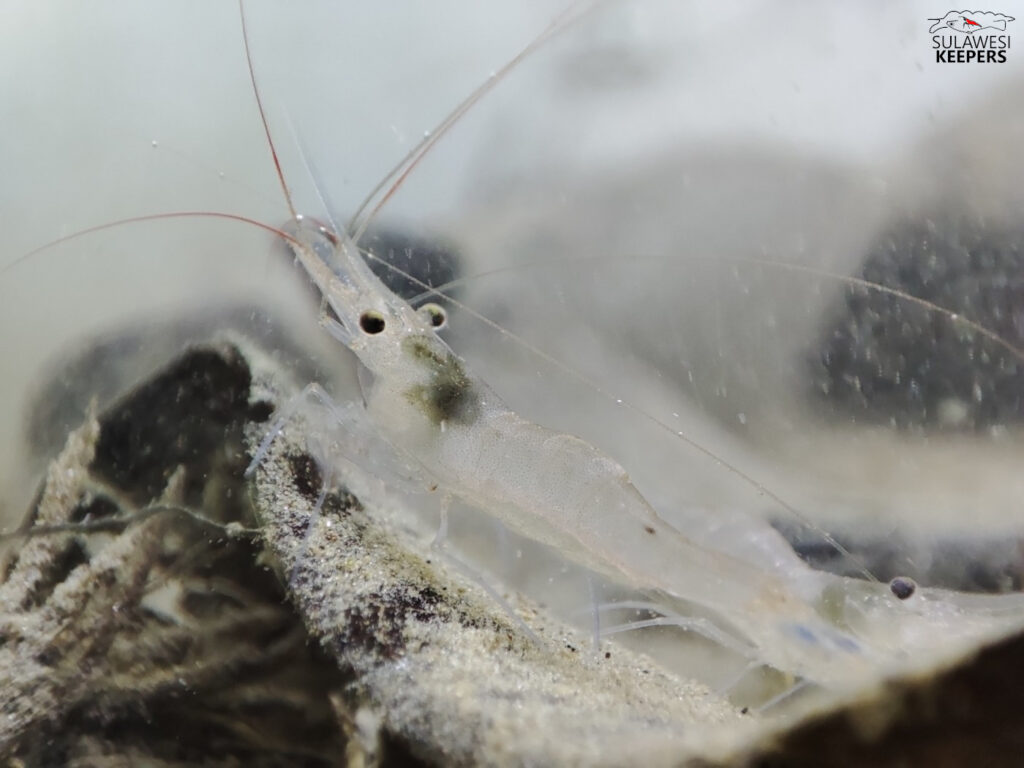
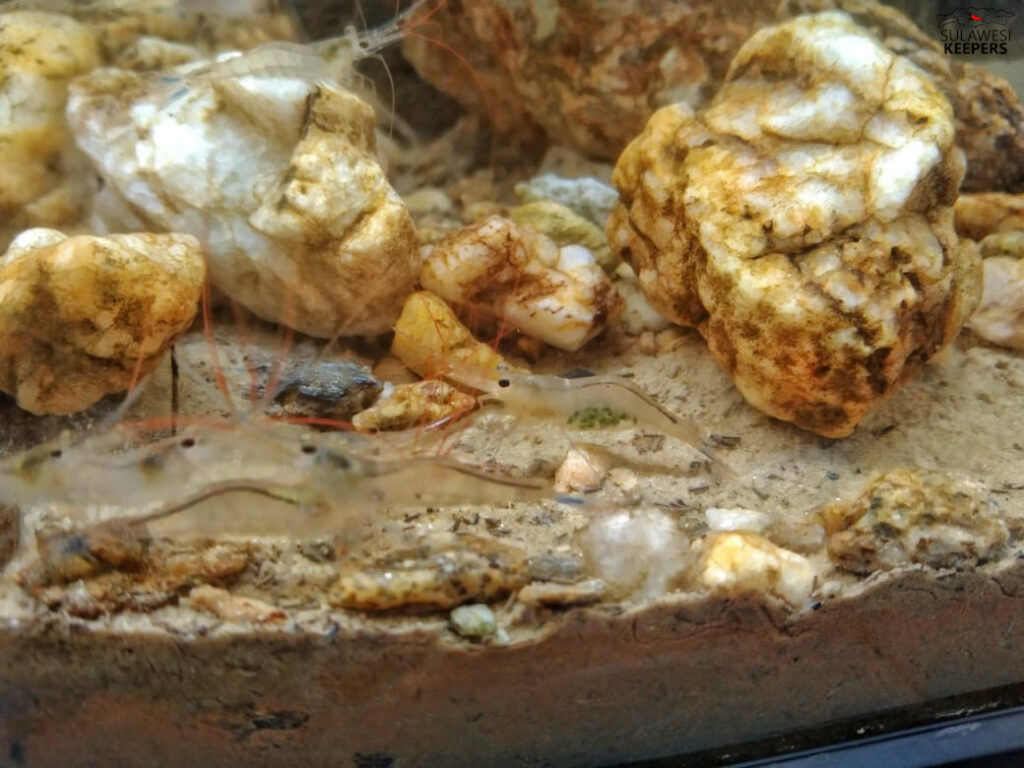
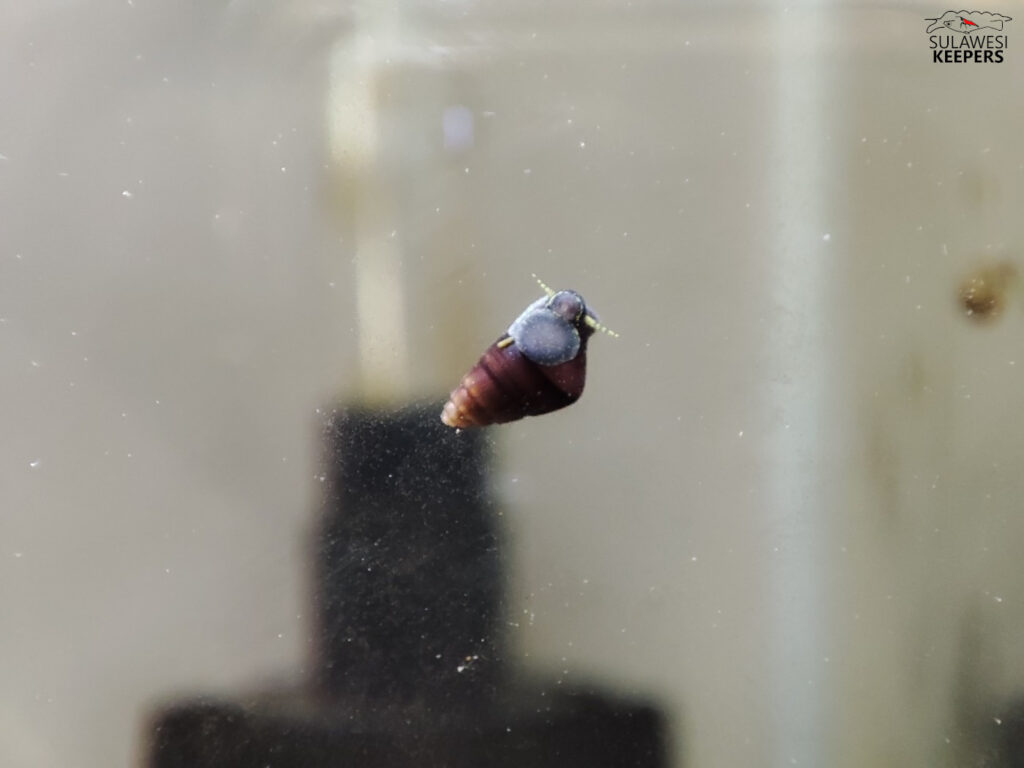
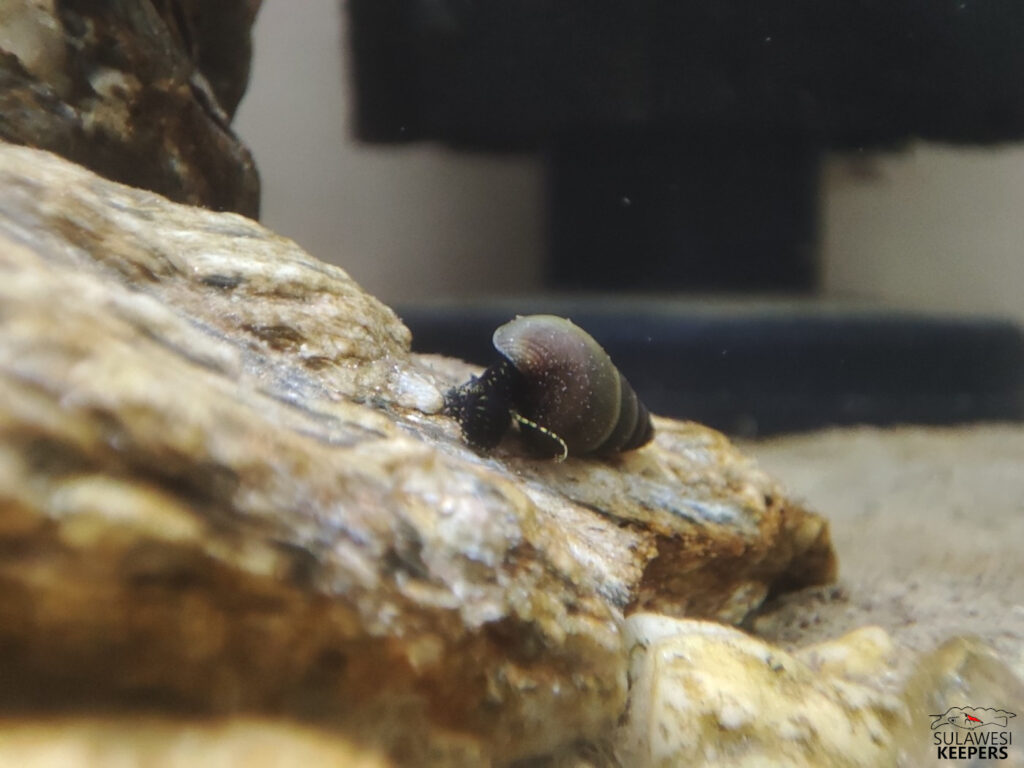
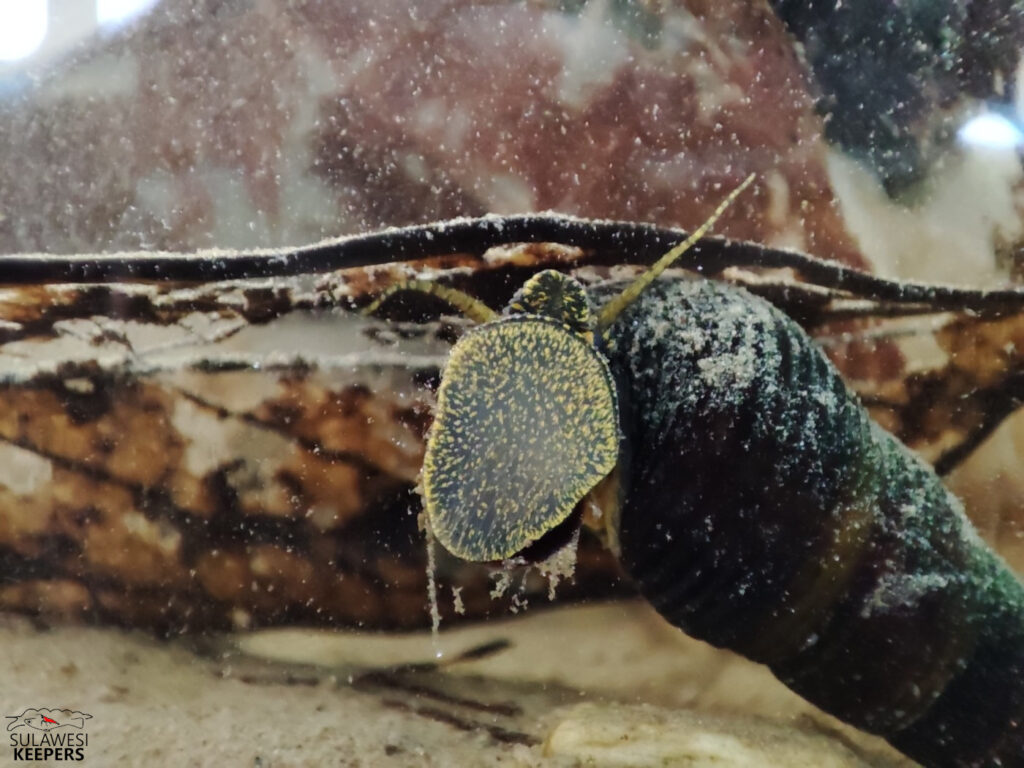
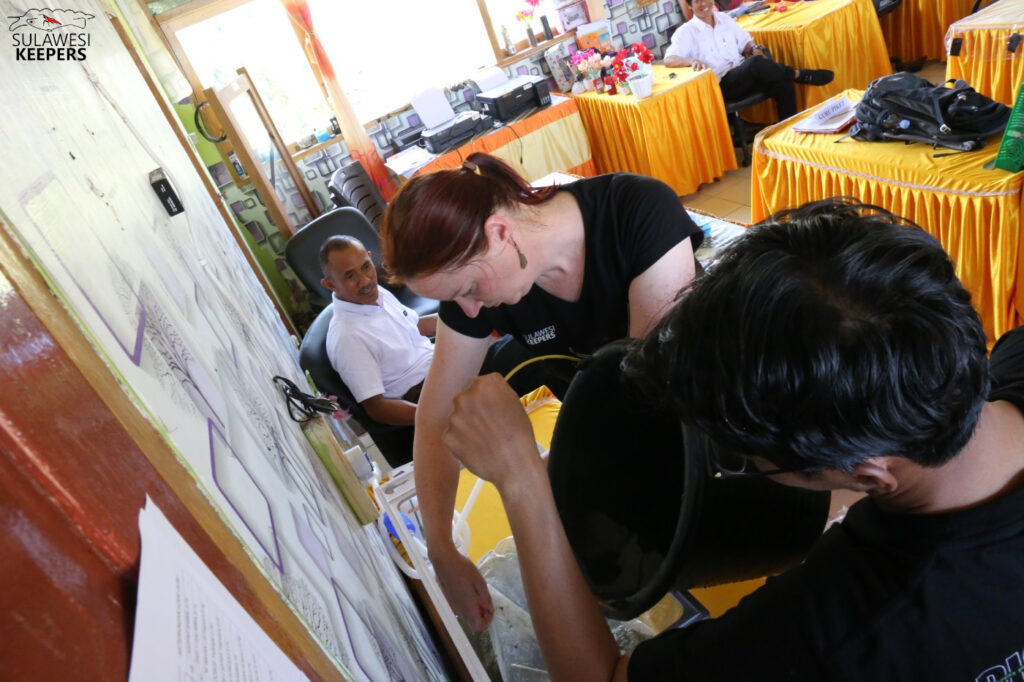
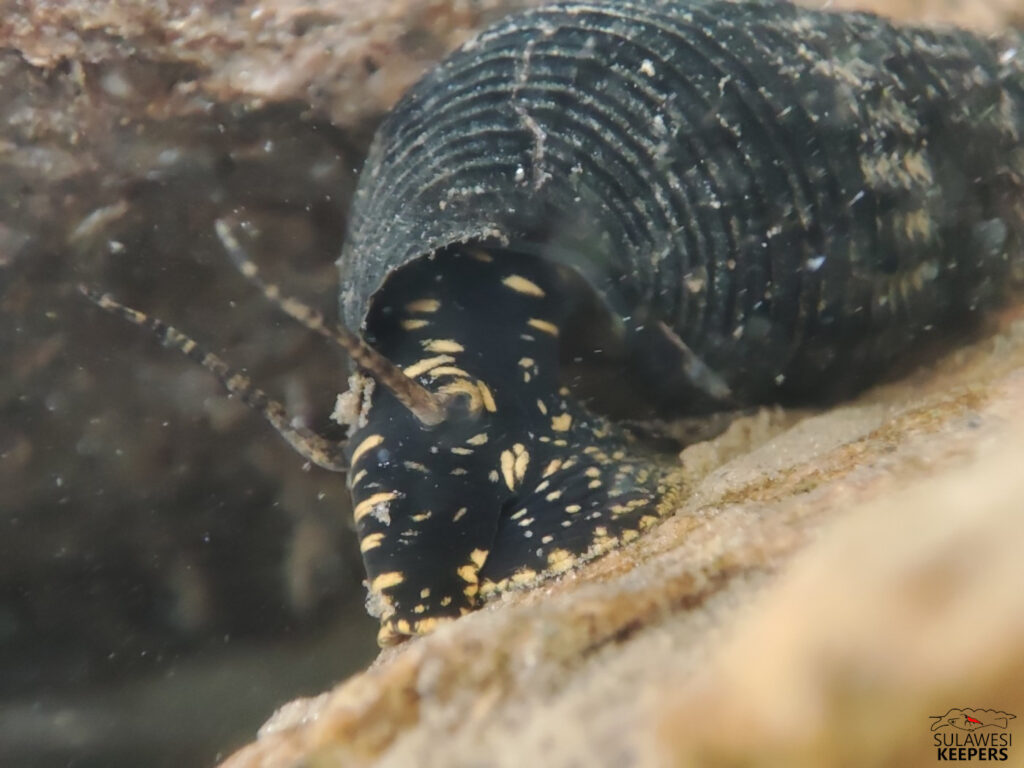
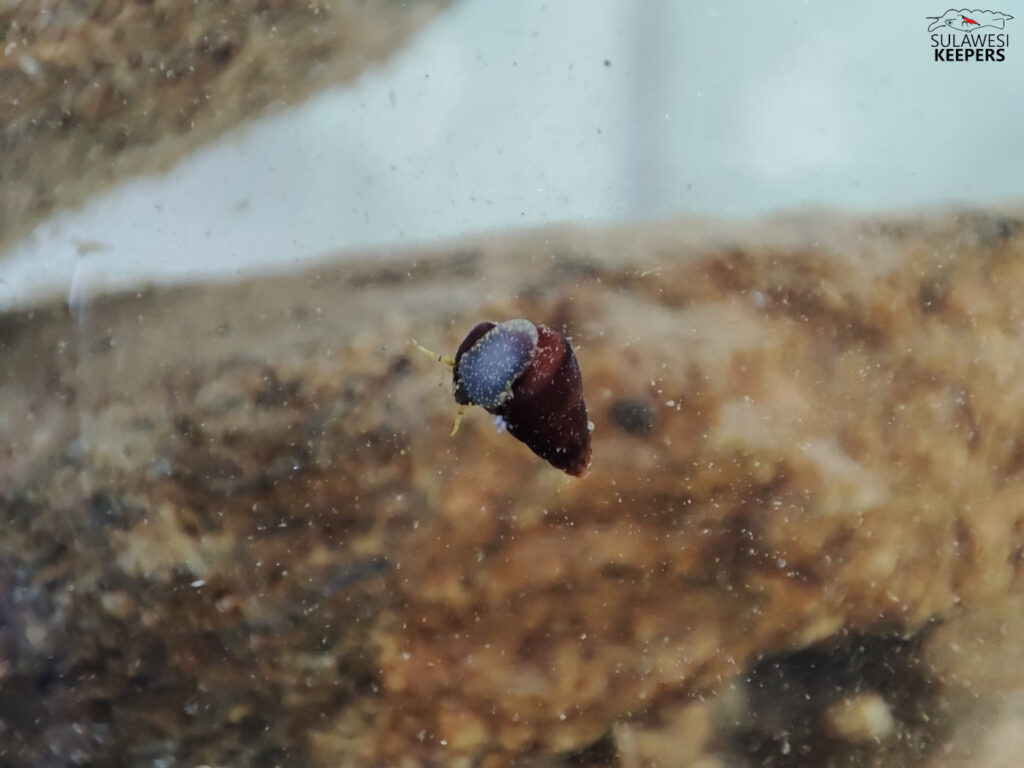
Teams from five schools (SMP Negeri 1 Pamona Barat, SMA Negeri 1 Pamona Barat, SMA Negeri 1 Pamona Utara, SMA GKST 1 Tentena and SMA Negeri Harmoni) then completed a half-day training in aquarium care. Because we knew exactly in advance what equipment the aquarium would have and what animals would be in it, we wrote a very specific 20-page Lake Poso aquarium husbandry manual. But it was not just instructions on how to care for the aquarium. We also explained the basic biological and chemical processes that take place in the aquarium. It is important to know why too high a temperature is a problem or what the consequences are of neglecting water changes. We also introduced two selected species that were to inhabit the aquarium: the snail Tylomelania toradjarum and the shrimp Caridina caerulea. Both are relatively undemanding species that should do well in the aquarium and the children could also look forward to raising their young. It was not possible to add any other animals to the aquarium, as this would completely disrupt the balance and lead to animal deaths.
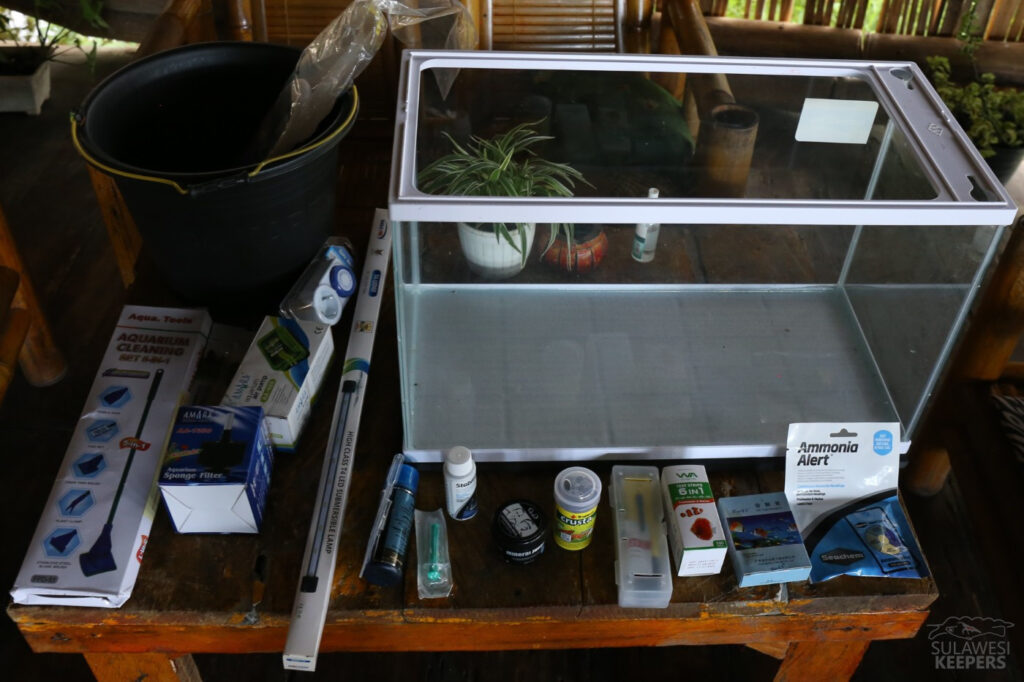
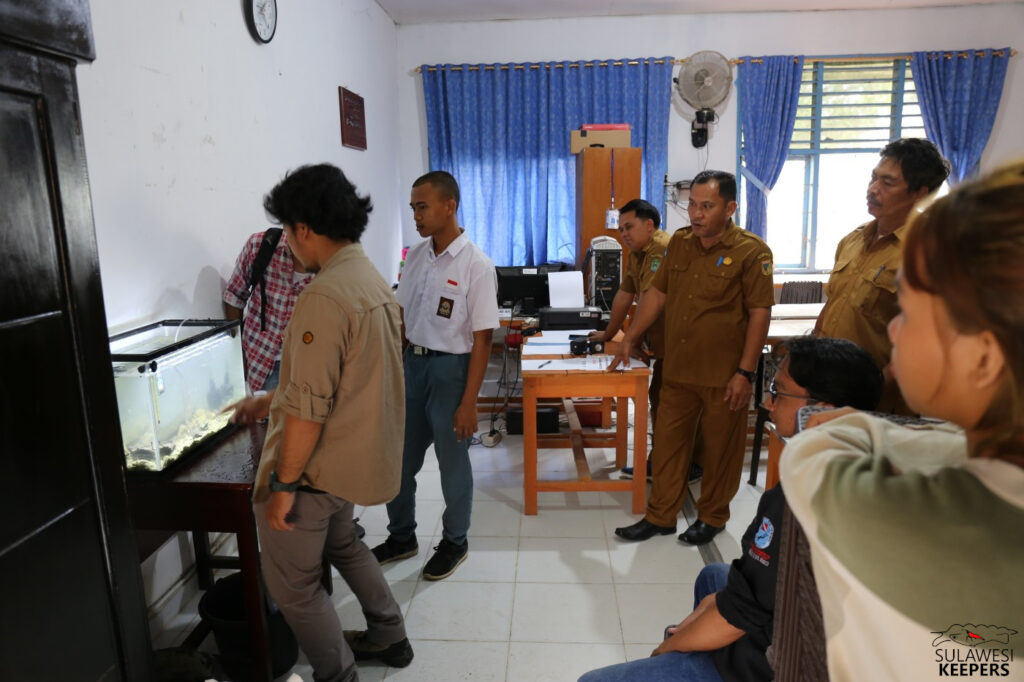
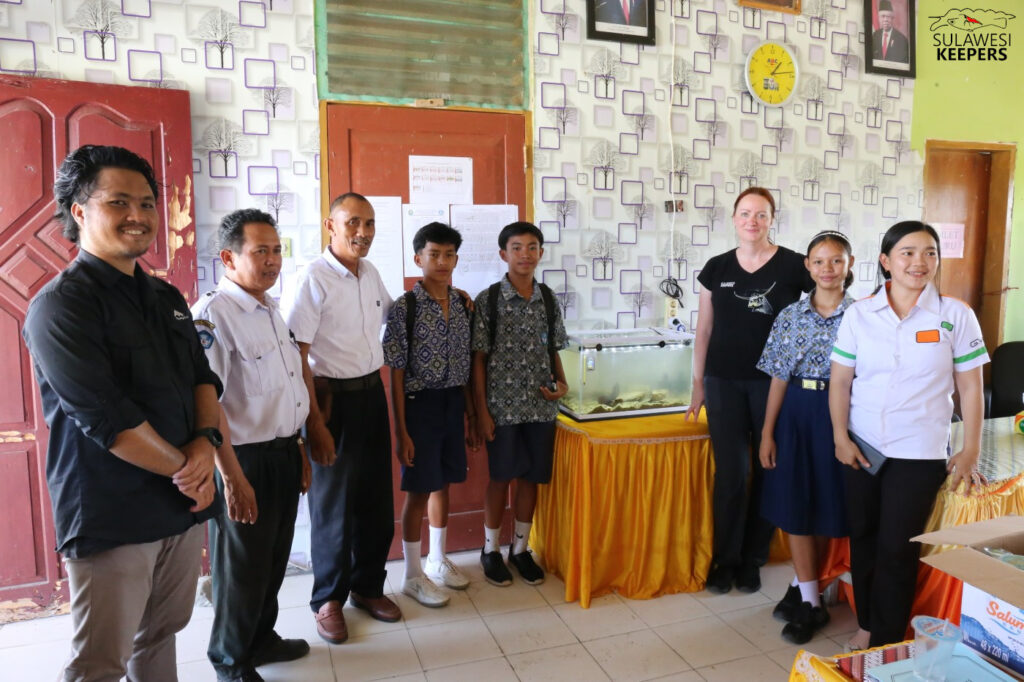
The teams of students and teachers followed the training very closely. I was personally surprised that the children were able to concentrate for several hours on the explanation, which was neither easy nor particularly fun. There were very good questions, we discussed all the legitimate concerns about the water source, power outages… I think we ended the seminar with mutual assurances that the aquariums would go into prepared hands and that the schools would have all our support in situations that might arise. After the seminar, all my nervousness about entrusting schools with living creatures fell away. (Creatures that local people collect and consume… without ever observing them alive!)
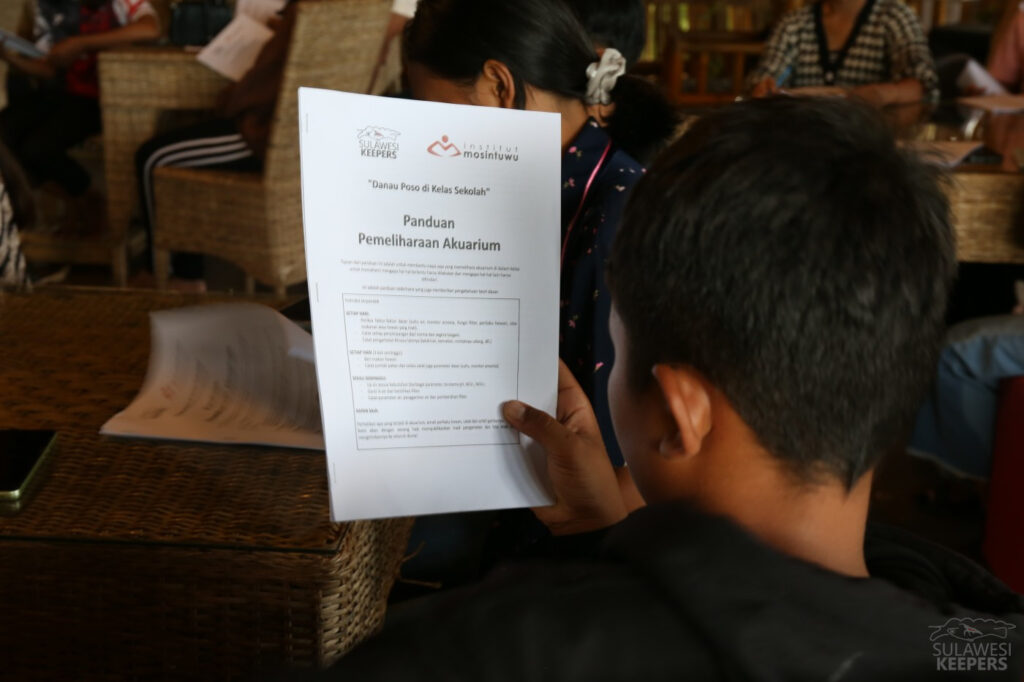
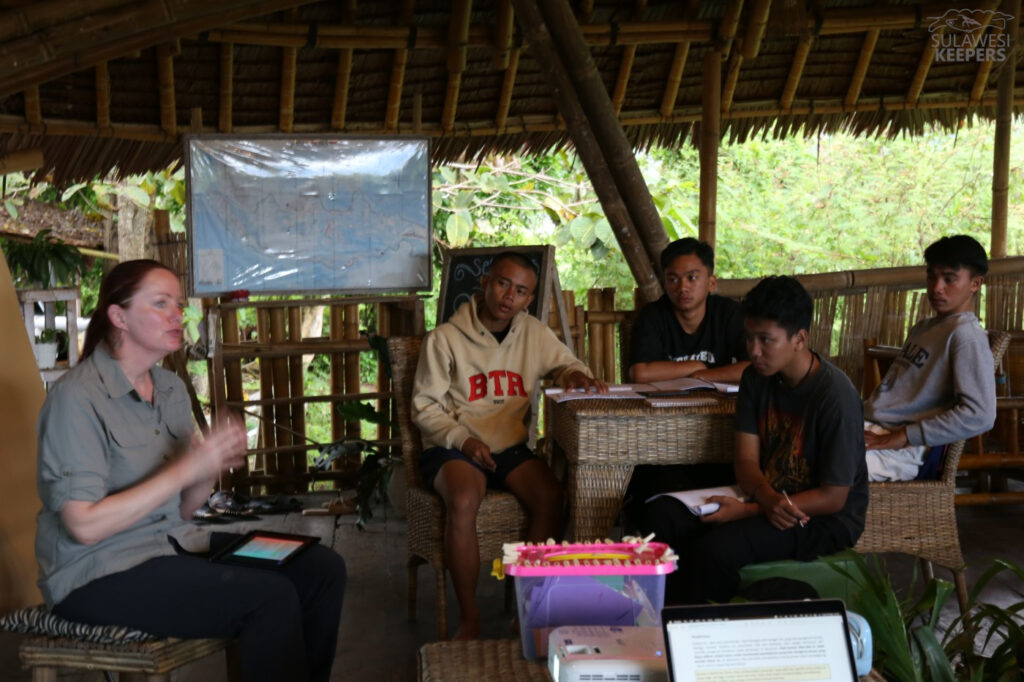
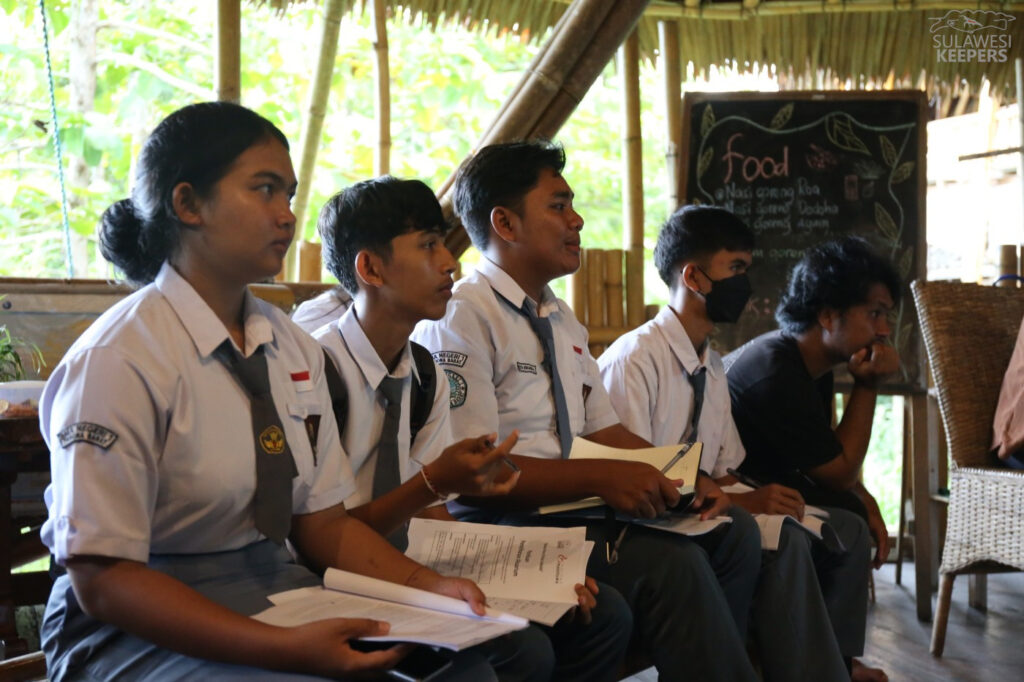
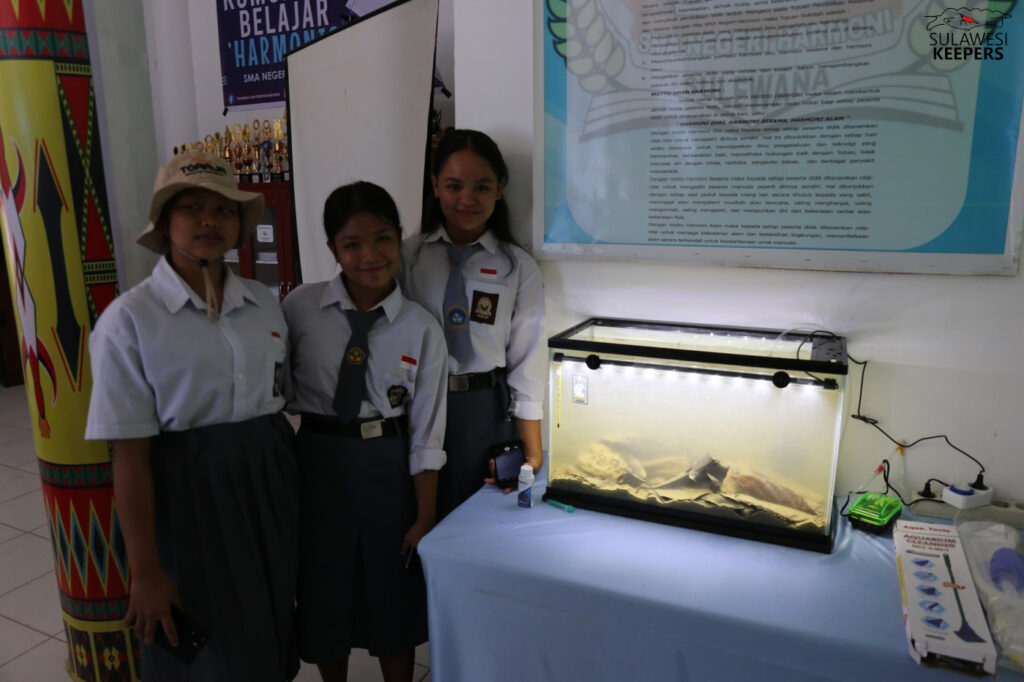
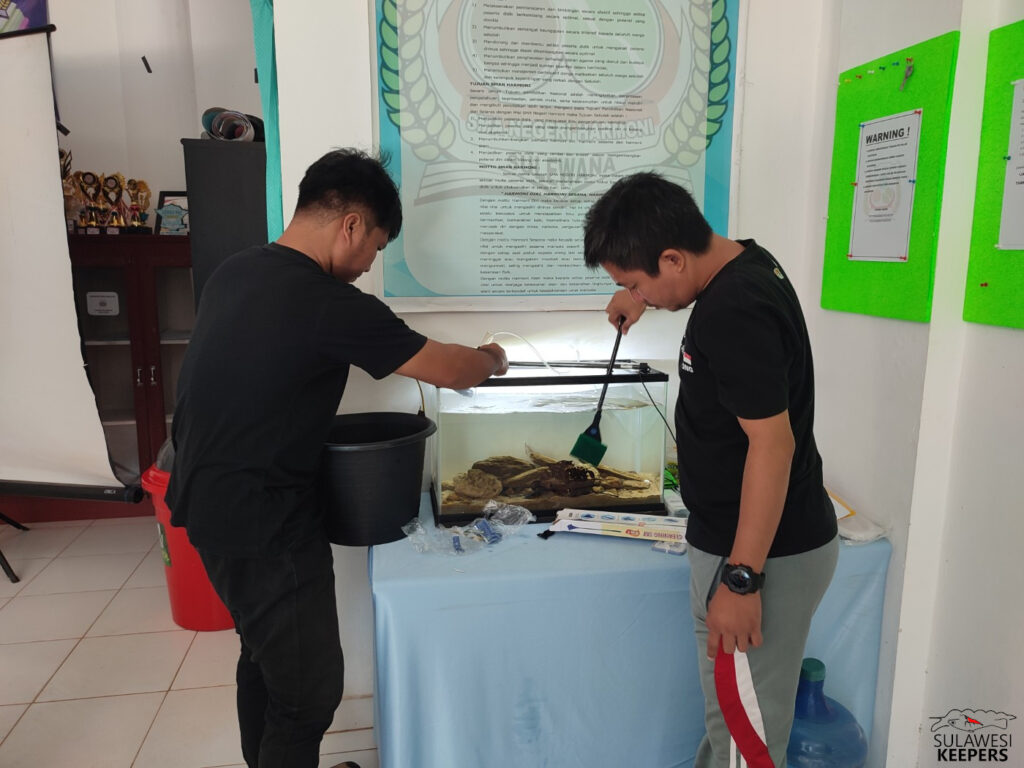
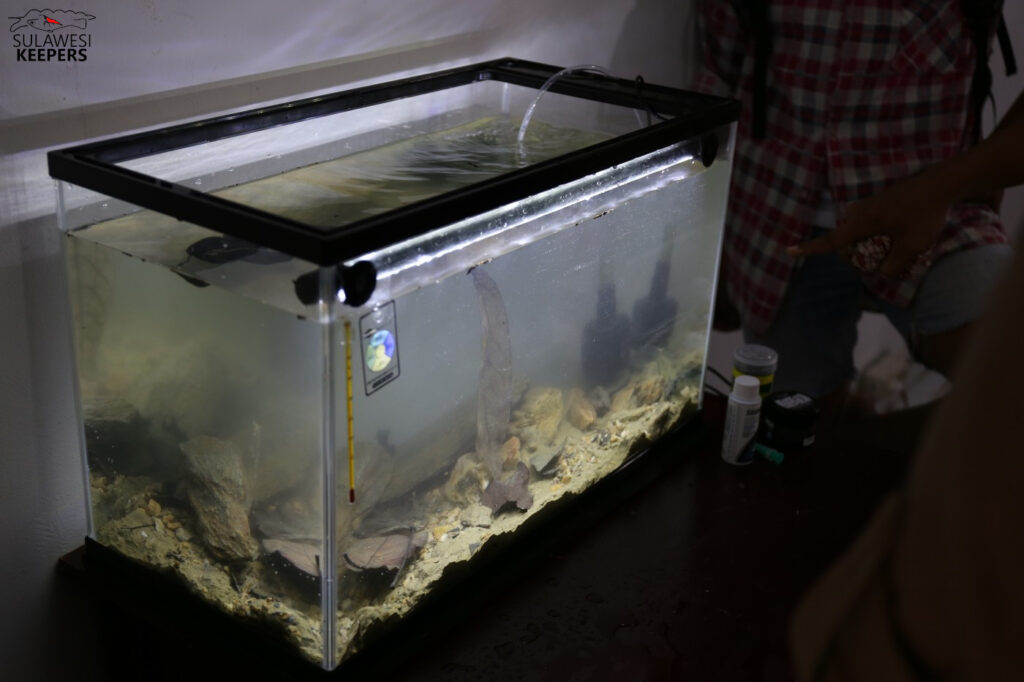
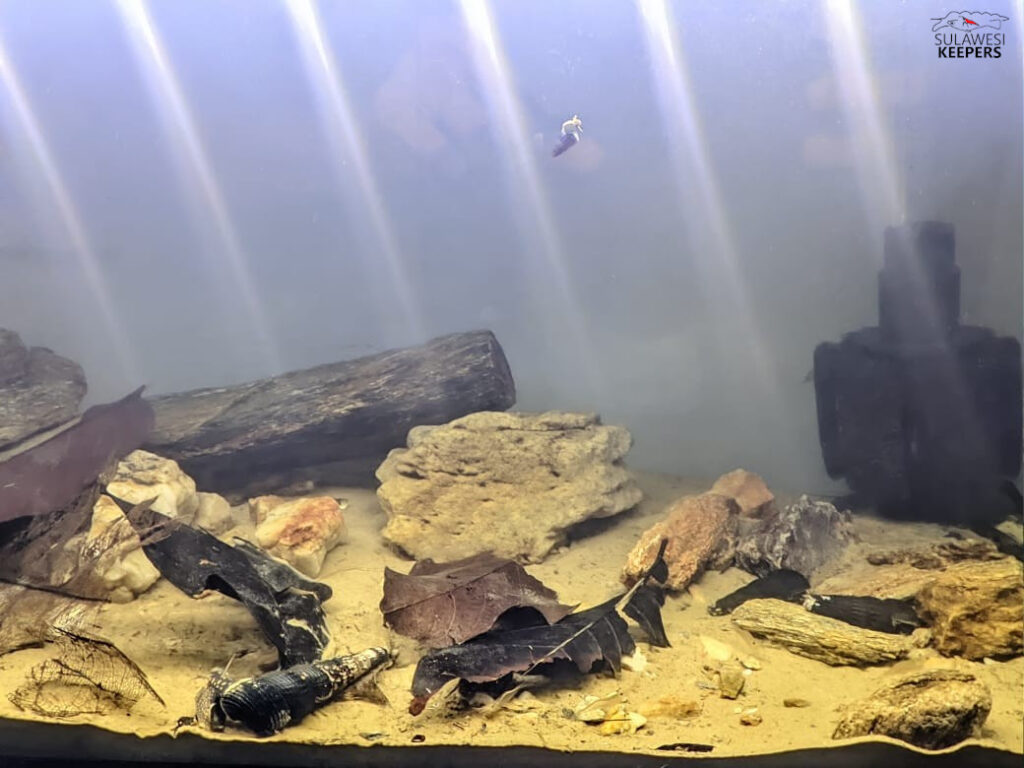
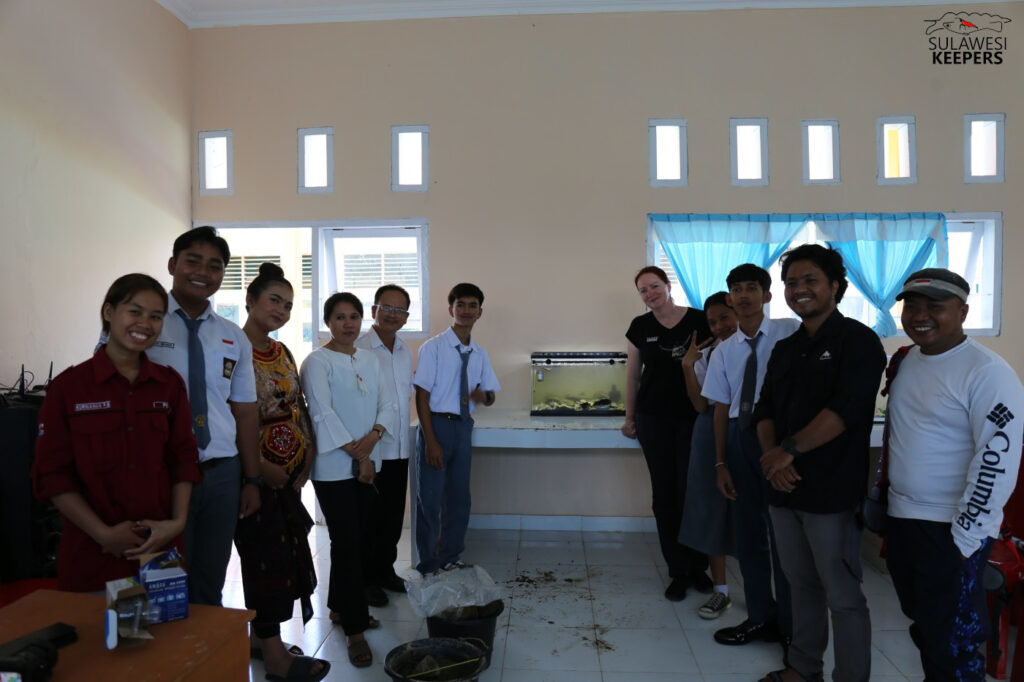
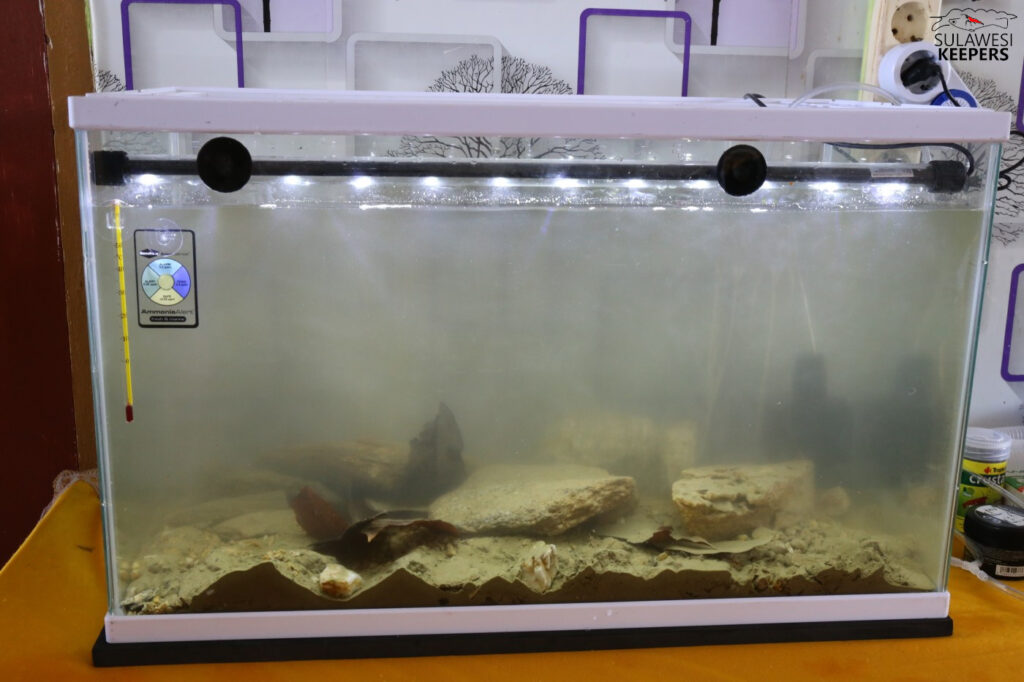
We ceremonially handed over the aquariums during seminars in schools. Then we installed them including the equipment, arranged the substrate and decorations. We handed over food and preparations for testing and treating the water. The shrimps and snails themselves were brought by our colleagues from Institut Mosintuwu later, when the aquariums were well established.
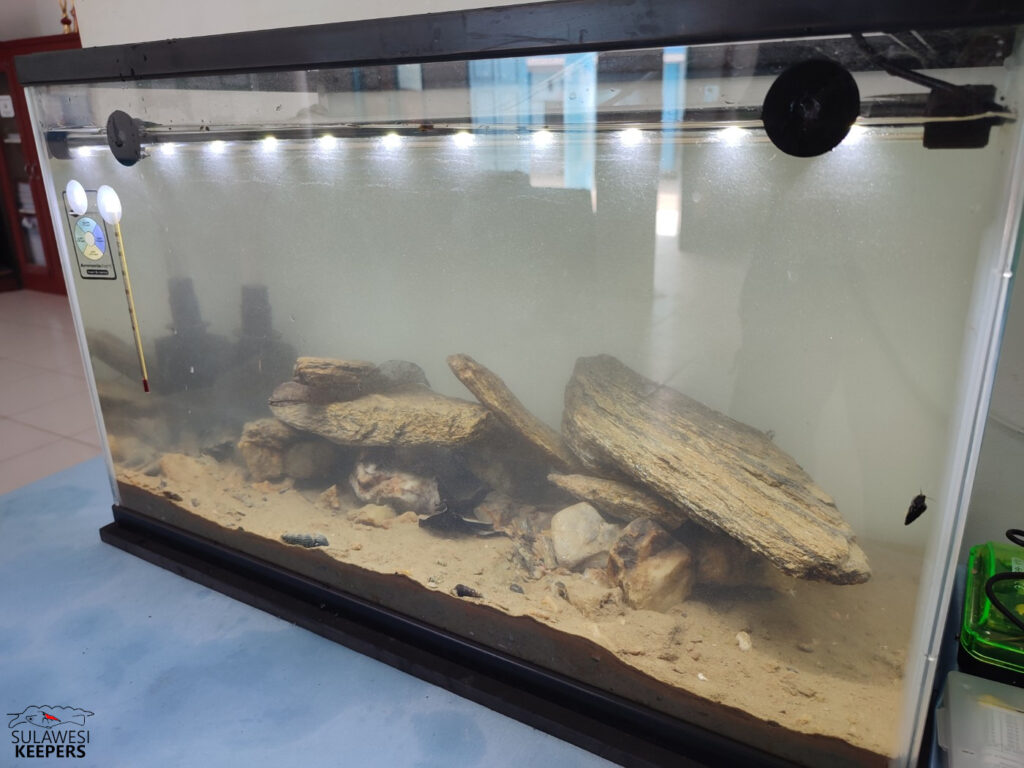
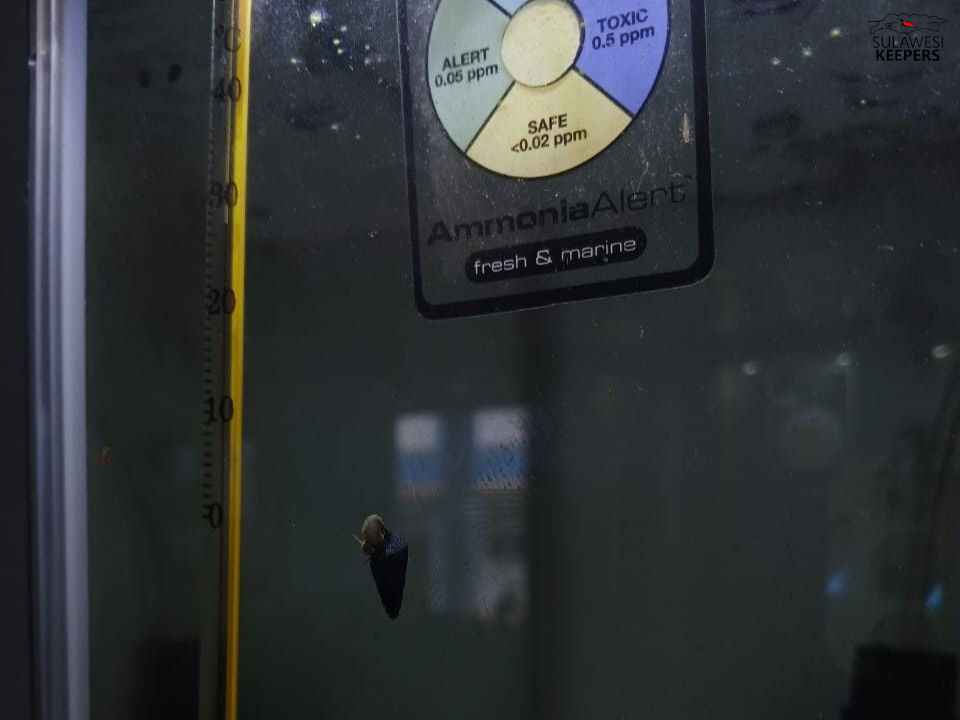
And how did the aquariums fare? A check after six weeks showed that the equipment is working properly with few exceptions, and any power outages have no negative impact. Ammonia levels are safe, pH is also OK, and the temperature is between 27 and 29 °C. Progress was noted by the schools:
SMA Negeri Harmoni
- several shrimps successfully molted; baby shrimps + 5 snails born
SMA Negeri 1 Pamona Utara
- 3 shrimps carrying eggs + 3 snails born
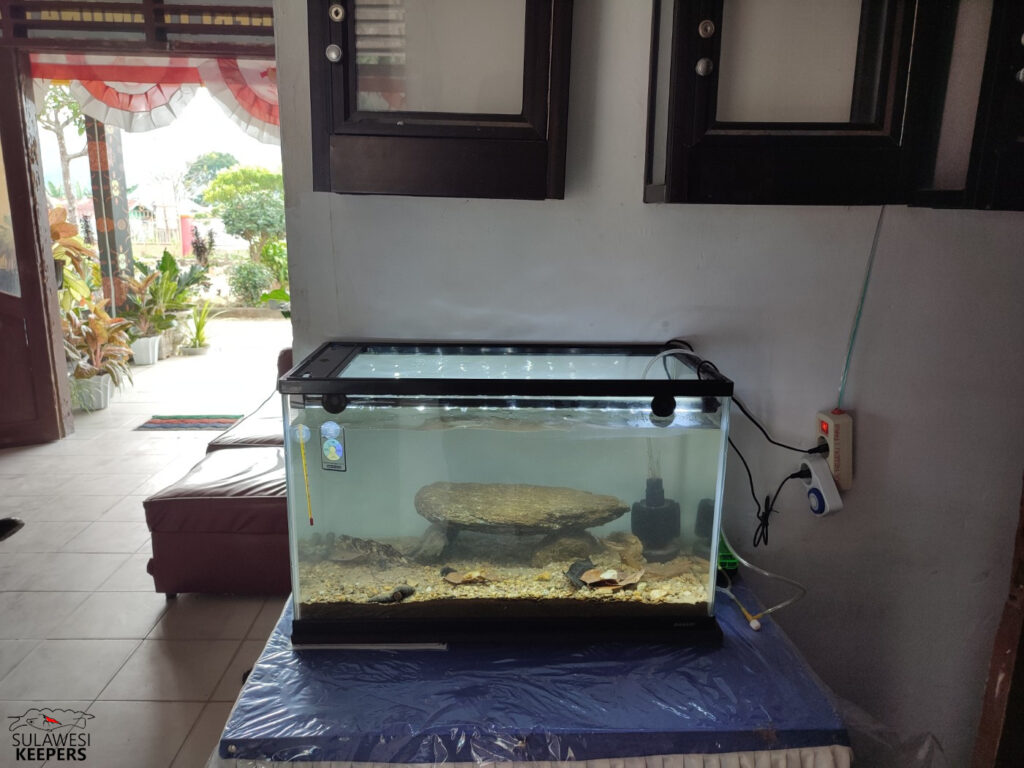
SMA GKST 1 Tentena
- 1 shrimp carrying eggs + 5 snails born
SMA Negeri 1 Pamona Barat
- 4 shrimps carrying eggs, several shrimps have already hatched + 5 snails born
SMP Negeri 1 Pamona Barat
- at least 10 shrimps died; 1 snail died, but 2 babies were born
- unfortunately, the school did not follow the manual closely and the aquarium was not cared for by the trained team, overfeeding occurred
Although the results are not 100% positive, we believe that this initiative makes a lot of sense. Taking care of an aquarium combined with observing underwater life directly in the lake is an irreplaceable experience from which everyone will take away admiration for the beauty of the world and great respect for the functioning of natural processes.
We thank our partners, especially Institut Mosintuwu for all communication with schools and their preparation for accepting aquariums already since 2023, as well as AKWB, MEGAZOO & Friends, Ostrava Zoo, EUAC and individual donors for their comprehensive support of our activities!
Markéta Rejlková