
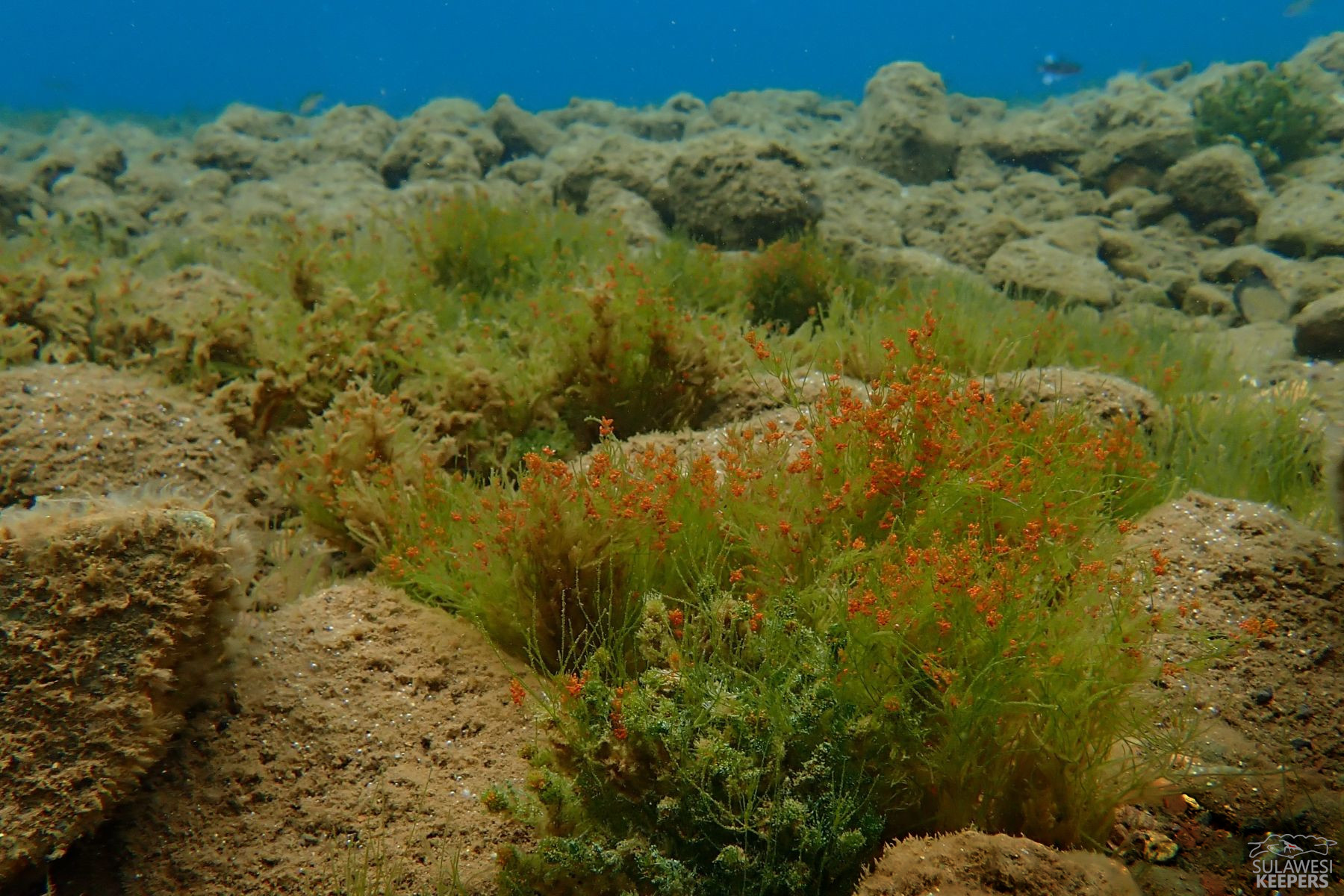
The expedition to Sulawesi in 2025 had a single goal: Lake Matano. And it combined three important activities: exploring both known and new locations, intensive meetings with the local community and, of course, cooperation aimed at protecting endemic species. With the participation of our other Indonesian partners, we learned a lot about Lake Matano and shared our knowledge ourselves.
I will now try to share a few photographic highlights from the eight intense days:
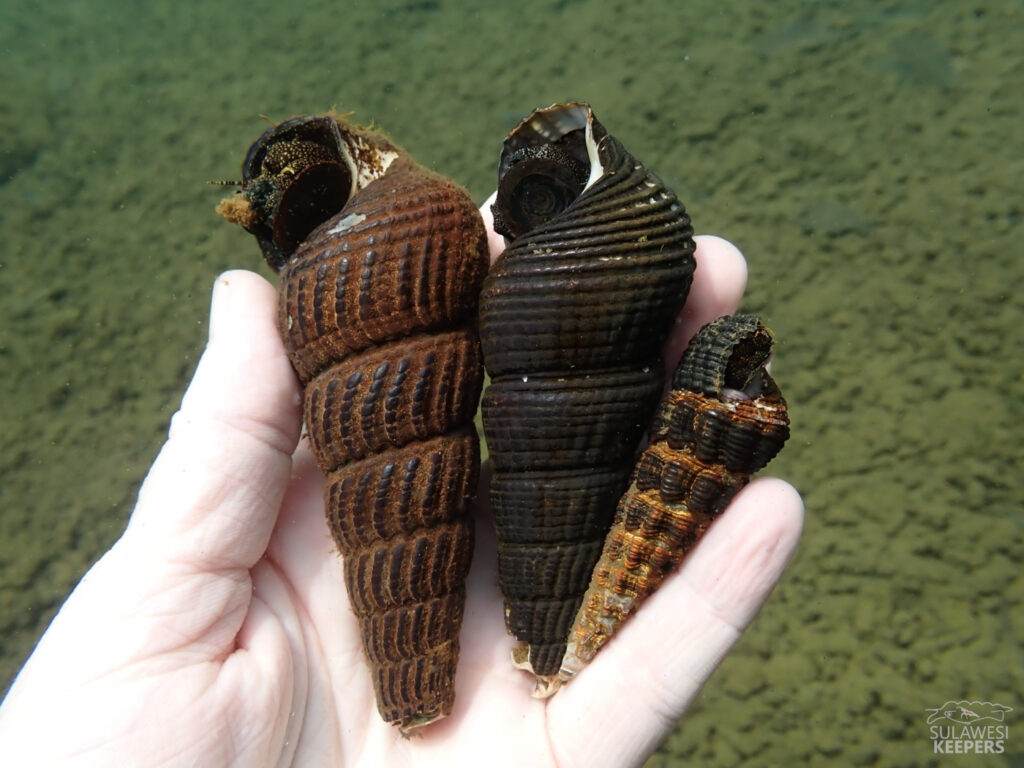
1. More portraits of snails of the genus Tylomelania
Focusing on snails has yielded results: many new observations and documented occurrences of species whose natural habitats we didn't know much about until now. We will soon share our field observations as part of our husbandry guidelines.
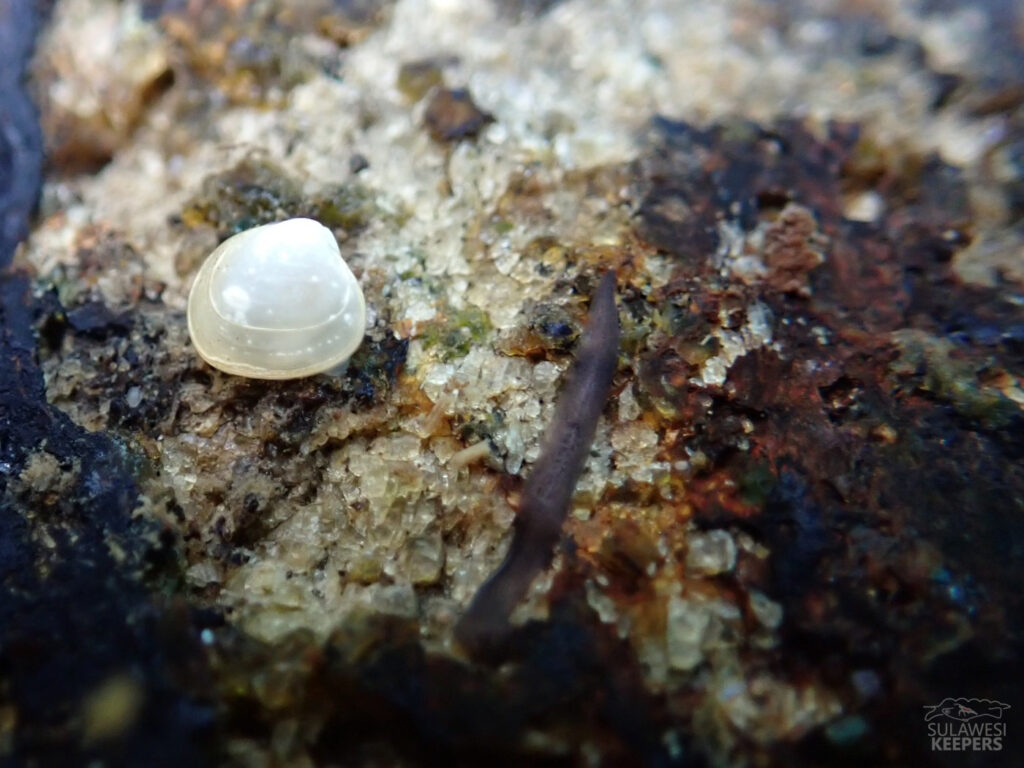
2. Tiny Pisidium
We usually focus on the four main groups of freshwater fauna: fish, snails, shrimps and crabs. This leaves out the bivalves, which are also hard to be overlooked in lakes. Well, this applies to the larger species of the genus Corbicula; only with a lot of luck can you find the tiny Pisidium species well hidden under the rocks. These clams measure only a few millimeters and have not yet been fully taxonomically studied.
3. Sandbanks in the waves
New to me were the conditions in two bays, where there was sand on the bottom (in both cases of a different color). Add to that the relentless waves and swaying clumps of plants. I'll show you this on video soon!

4. Crab swarm
It is always extremely interesting to observe Sulawesi crabs in the wild. I already have my favorite crab spots right in Lake Matano. But the picture shows a chance encounter – the carcass of a large goby attracted several individuals of Syntripsa matannensis and Parathelphusa pantherina. The crabs were peacefully feasting and did not attack each other.

5. Gobies close up
In 2025, gobies were particularly curious and gave me their immediate attention many times, making it difficult to photograph them at very close range. Both Glossogobius intermedius and juvenile Glossogobius matanensis were approaching.

6. Oryzias matanensis
You can see ricefish, but rarely manage to actually observe them. They are fast and usually disappear into the distance in a flash. In 2025, I finally got lucky and peacefully observed and photographed a school of these blue-eyed fish in two completely different places.

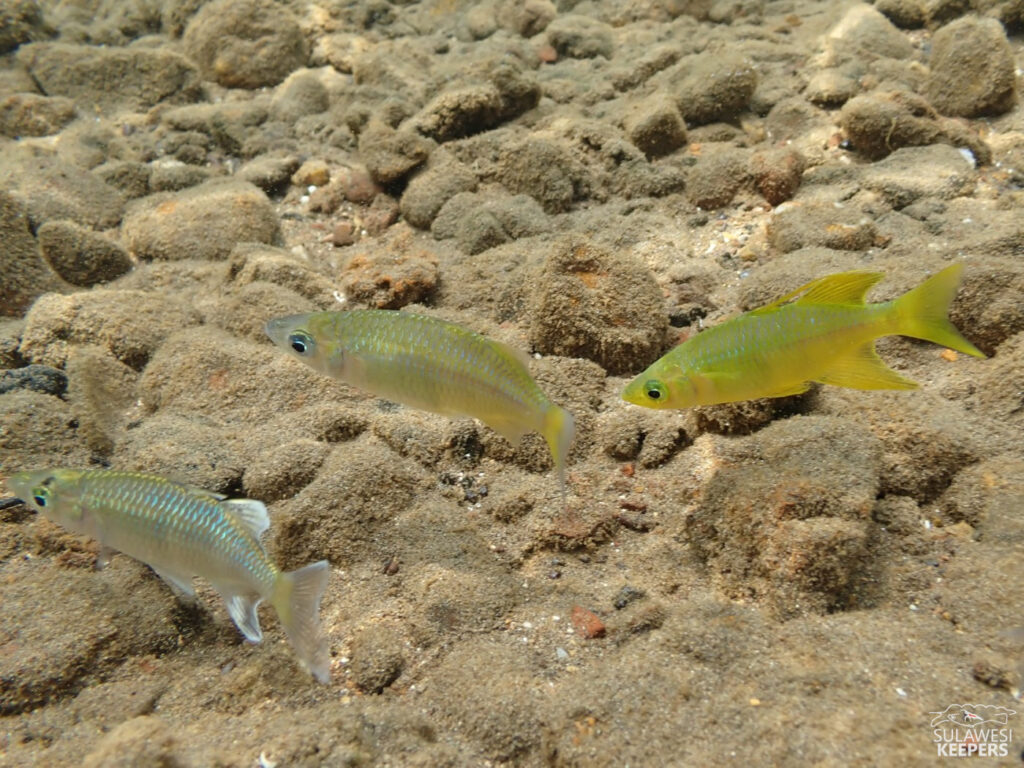
7. Colorful and fast sailfin silversides
If ricefish are difficult to photograph, it is doubly so with sailfin silversides (Telmatherina spp.). These fish will often come close, but will not stand still. They are relatively large, and the males of some species are strikingly colored.
8. Pandanus
The flooded pandanus have their own specific atmosphere and rich fish life. They can be found in the southern part of Lake Matano, including several islands.

9. Hidden spring and plant oasis
I was very surprised by the place where a spring of water was gushing out on the shore of the lake in the shallows. Along with it, a stream of bubbles. It could have been carbon dioxide, because in the immediate vicinity there were a lot of aquatic plants that do not grow elsewhere in Lake Matano. I definitely have to go back there sometime and explore the place better!

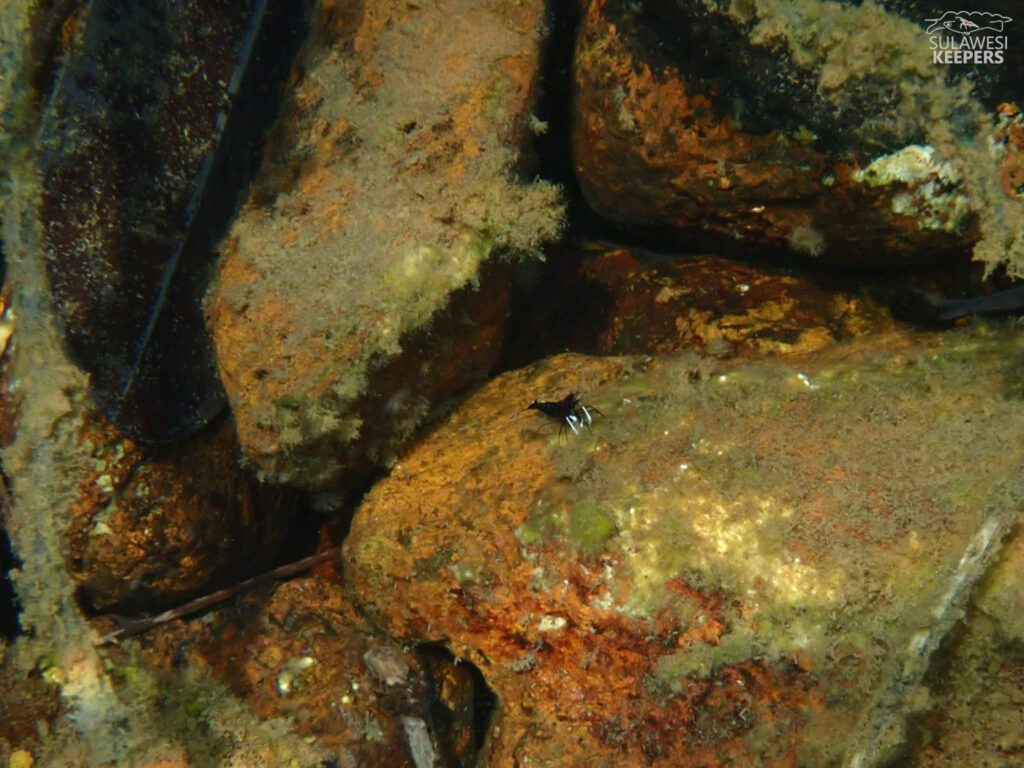
10. Caridina dennerli still survives!
After discovering the "secret spot" last year (see more here), I checked out this unique location again. And I was not disappointed. It is the only place where Caridina dennerli do not hide deep under rocks from invasive fish.
These are my top 10 memories related to nature. But I can't leave out three events related to people:
11. Shrimp workshop
For friends from the community Spearfishing Luwu Timur, we organized a half-day event focused on shrimps. We discussed aquarium husbandry, but also shrimp collecting, storing and transportation. A local shrimp hunter with extensive experience also participated in the event. The result of the lecture and discussion was that the local people now have a better understanding of the needs and opinions of the “market”; they understand the demands of shrimps; and they will direct their efforts even more towards protecting shrimps directly in the lake. We agreed on experiments that can help to better understand and subsequently reduce threats (invasive fish, but also algae growth) and at the same time reduce the pressure of collectors on the surviving wild populations of Caridina dennerli. Sustainable shrimp farming in the lake is not a utopia, but conservation with economic benefit.

12. Workshop on fish pellet processing
Tarsius organization, founded by our member Iqram together with students from UNHAS, was the main organizer of the day-long workshop on the utilization of invasive fish. With financial support from Sulawesi Keepers, they invited two professors from the university in Makassar to explain to local community representatives how to utilize fish in the form of feed pellets for poultry. The explanation focused on the nutritional properties of the pellets, but also on the organizational and economic aspects of the process. I gave a lecture on the importance of Lake Matano and the reasons why invasive fish need to be reduced. Iqram presented a plan for the eradication of invasive fish in selected locations with a quantitative impact assessment; this project will run for another year. There was also a practical demonstration, as the host community Spearfishing Luwu Timur received two machines needed for pellet production. The whole event was very interesting and motivating, we will look forward to the ongoing progress!
13. Spearfishing
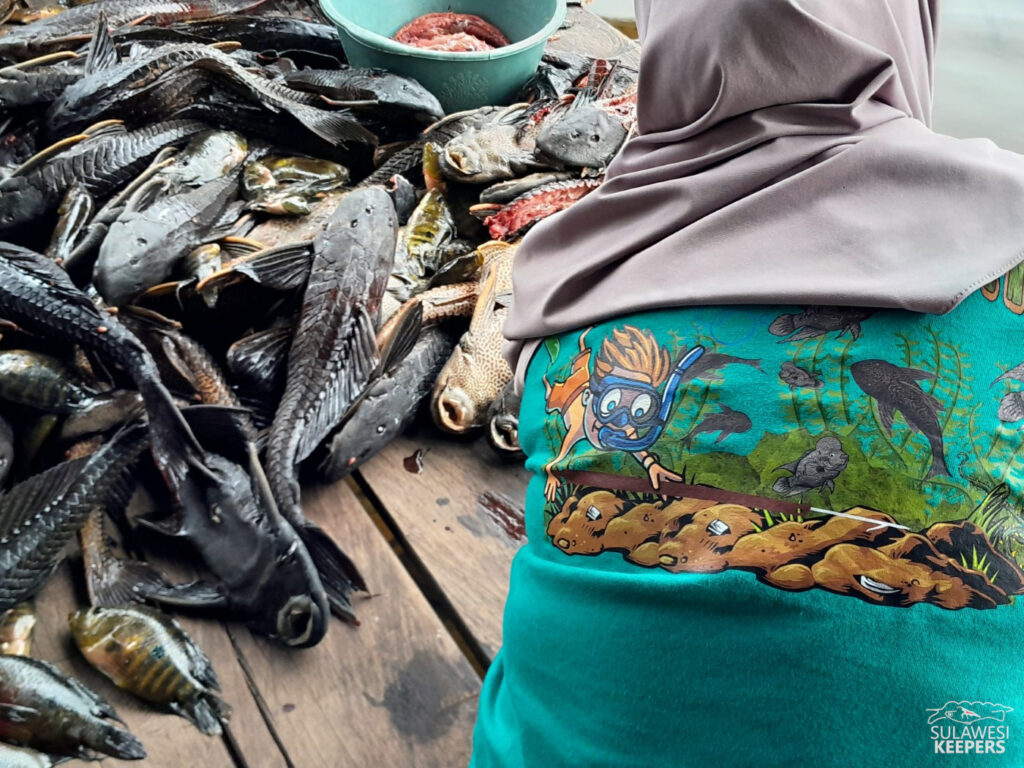
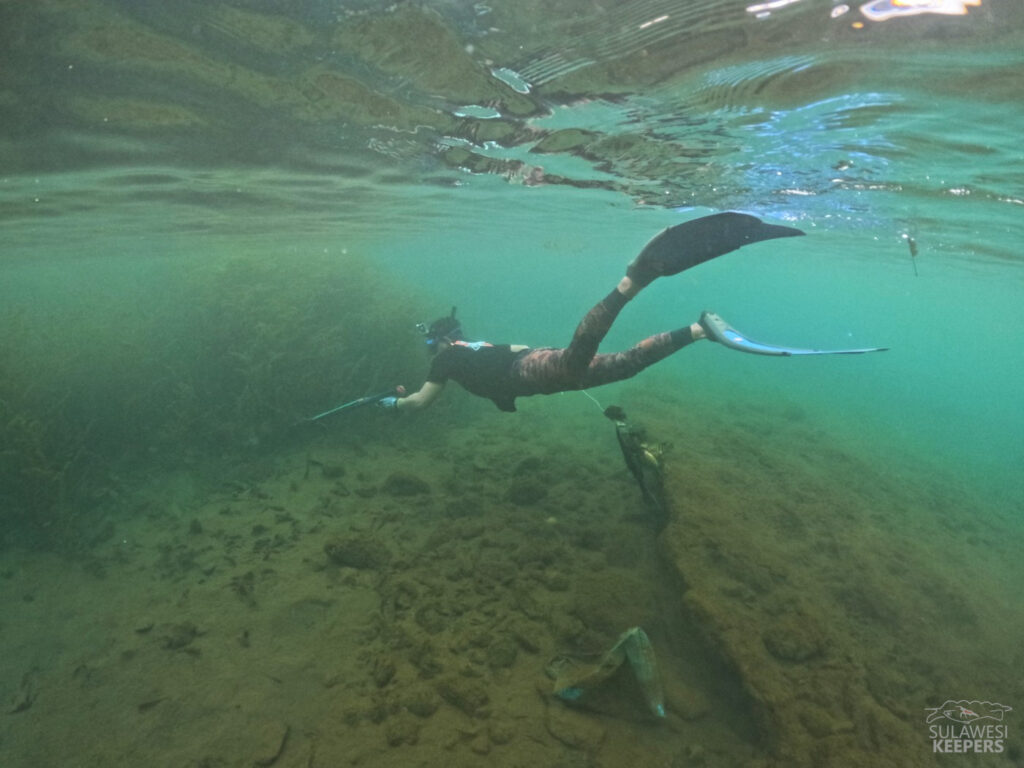
Without fishing, of course, the eradication of invasive fish and processing into pellets would not be possible. Therefore, we accompanied the Spearfishing Luwu Timur team at work a few days in advance. In half a day, they caught dozens of invasive cichlids and catfish. They then had to clean them by hand and let them dry in the sun. The process is laborious and lengthy, but it can bring economic profit. Not to mention the benefit for the protection of the native fauna of Lake Matano!
Markéta Rejlková