
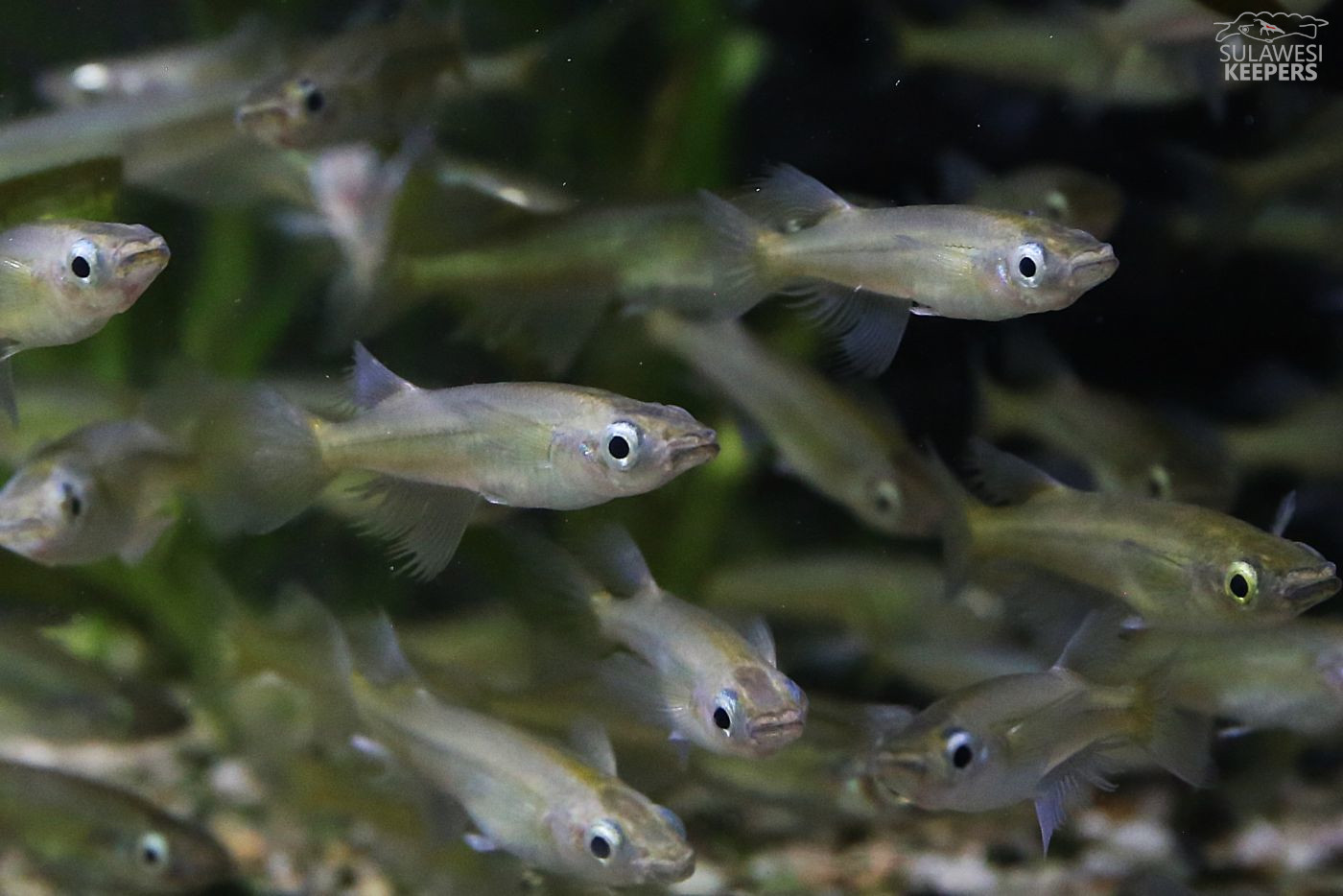
My practical experience in keeping and breeding ricefish from Sulawesi began with Oryzias sarasinorum. I received my initial specimens in early 2018 from a well-known and dedicated aquarist who also worked for the Bavarian State Collection of Zoology in Munich (ZSM). It was at him that I first saw live O. sarasinorum and received valuable suggestions for my subsequent husbandry practices.
The aforementioned aquarist kept and bred the fish in a spacious aquarium with a fairly strong flow. The water was directed so that it flowed from the main aquarium through a grid into a secondary chamber and from there into the filter. The fry hatching in the main aquarium were thus drawn into the secondary chamber, where they could grow undisturbed. This principle, whether implemented with a grid or with delta-shaped pieces of glass glued together with a very thin gap between them, has proven successful not only with O. sarasinorum, but also with many other ricefish and numerous other fish species.
O. sarasinorum originates from Lake Lindu in Central Sulawesi. The species is listed as Critically Endangered (CR) in the IUCN Red List. This is the third highest threat level after "Extinct" and "Extinct in the Wild." Keeping and breeding this and other endangered species in aquariums is therefore an active contribution to species conservation. Every dedicated aquarist can participate! Interested aquarists can find further information in the Sulawesi Keepers' conservation breeding program.
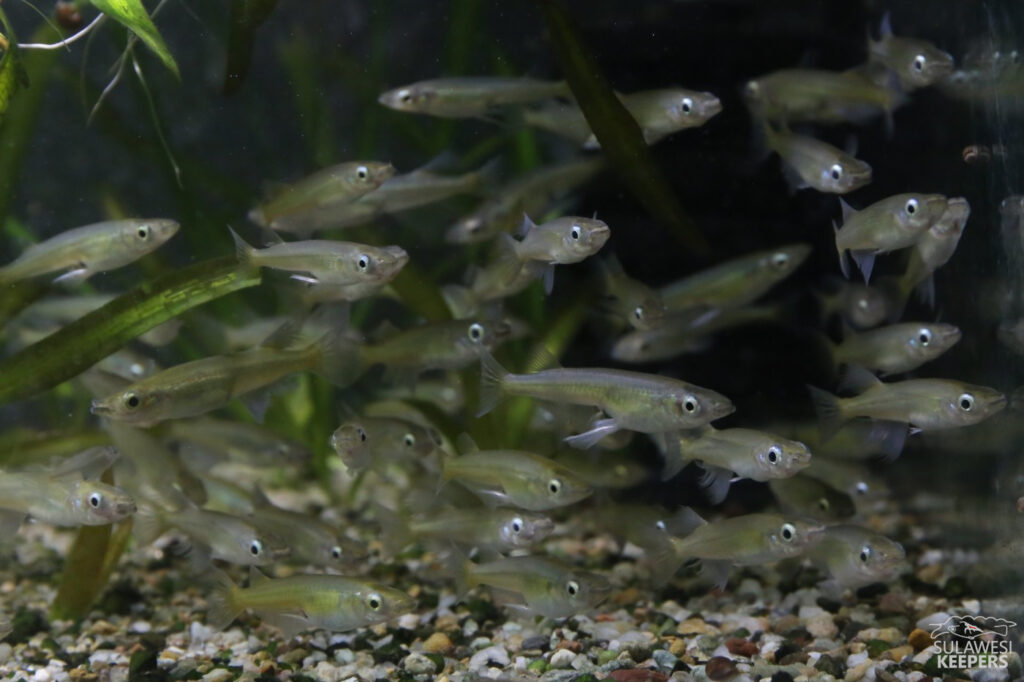
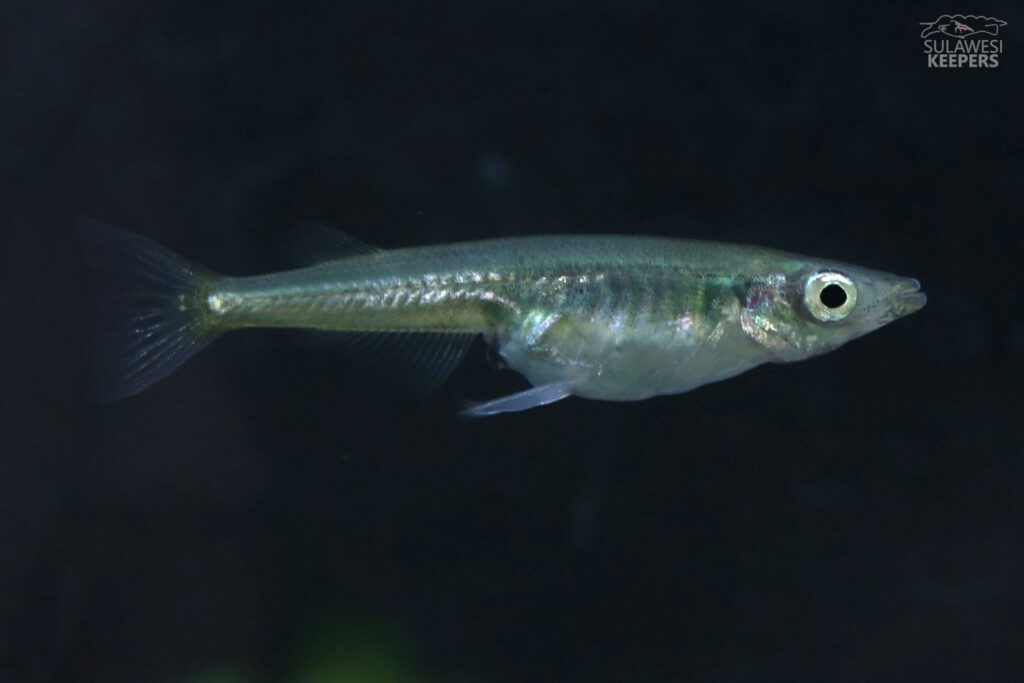
The arrow-shaped body of O. sarasinorum indicates that it is a good swimmer, naturally living in open water. Furthermore, with a total length of around 8 cm, this species is already one of the larger ricefish. Accordingly, the aquarium must be sufficiently large: 80 cm in length is the absolute minimum, but a meter in length is better. The aquarium's features are less important, as long as there is enough free swimming space. The tank should not be completely overgrown or resemble an "underwater rainforest." Very clean water is essential, free of pollutants and with only a small amount of metabolic waste. I personally use air-driven filter systems that create a flow, but ultimately, the most important thing is that the water is clean.
Water parameters are, at least in my experience, of secondary importance, as long as no extreme values are measured. This species thrived in Munich's very hard tap water as well as in the rather soft water at my home. Adequate oxygenation seems crucial; if oxygen levels are too low, older O. sarasinorum specimens, in particular, tend to stay close to the surface. The temperature in my tank is between 22 and 26 °C, which is a few degrees lower than the very warm Lake Lindu. As keepers, we have a responsibility to provide our fish with the best possible conditions. High energy costs must not lead to keeping fish incorrectly or at excessively low temperatures. This can result in impaired growth and reproduction. Some fish require specific temperatures for optimal digestion or become susceptible to various diseases if kept too cool (or too warm). O. sarasinorum, for example, will thrive at 30 °C, in keeping with its origins. On the other hand, consistently high temperatures can also cause fish to deteriorate and age more quickly. I keep numerous rainbowfish species from New Guinea, some of which also originate from warm lakes. I have had good experiences keeping them somewhat cooler, within their individual capabilities. The fish remain vital longer and live significantly longer. However, this must only be done within the acceptable range for each species. We cannot "retrain" Sulawesi fish to be cold-water fish!
Feeding this species is entirely straightforward; it will eat anything that fits in its rather small mouth. I feed it a variety of suitable flake foods as well as different frozen foods (brine shrimp, various daphnia, various mosquito larvae, and occasionally even small shrimp). Sufficient, high-quality food is essential. This species is very active and therefore requires a considerable amount of food.
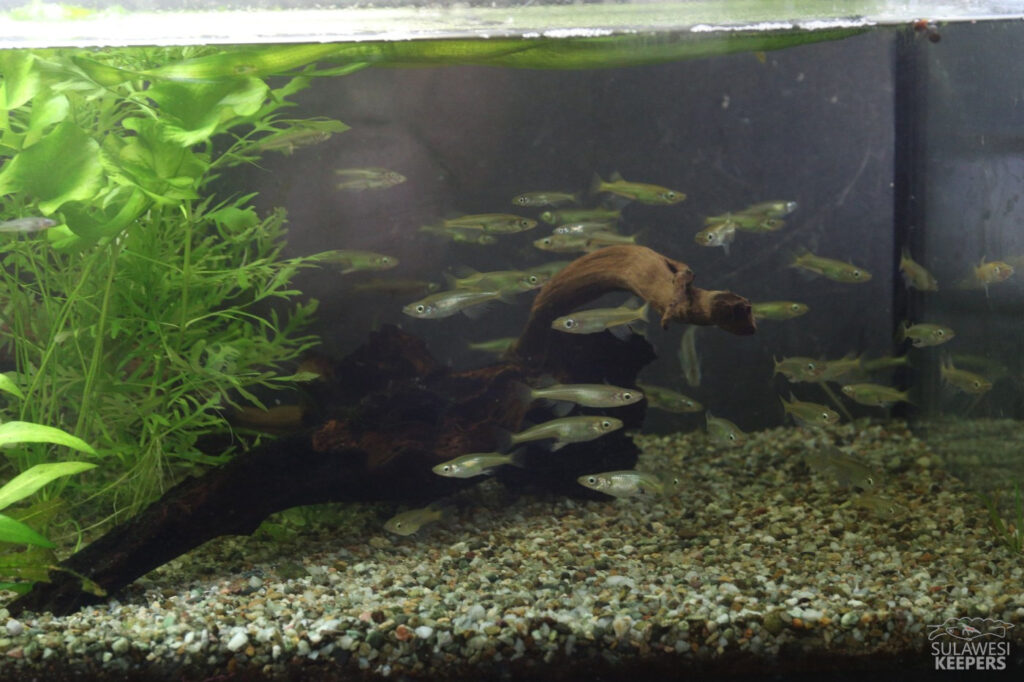
It is reported that O. sarasinorum prefers to swim in larger groups in the wild. This behavior is also evident in aquariums; the fish only feel comfortable in the company of a larger group. In my opinion, ten specimens are the absolute minimum for keeping them. Given their relatively long body size for ricefish, the necessary group size alone indicates the need for sufficiently large aquariums. Despite their size, O. sarasinorum is a very peaceful species, both with its own kind and with other species. However, the species is not very assertive. I keep them in a species-only aquarium and also maintain a "backup" in a second aquarium, together with various small and medium-sized rainbowfish species, which works quite well as long as the ricefish receive enough food.
O. sarasinorum, along with O. eversi and O. kalimpaaensis, is one of the species that carry their eggs around after fertilization until hatching, meaning they don't deposit them on plants. This is quite practical for breeding. Firstly, the species can be bred quite successfully in sufficiently large aquariums by providing an adequate covering of floating plants. A few fry will usually survive, enough to maintain your own stock and occasionally give some away. If you want to raise larger numbers of young fish, you can catch the carrying females and transfer them to a smaller tank with a dense covering of floating plants, where the young can hatch safely away from hungry tankmates.
Additionally, I'd like to mention a third method, which is controversial and definitely not for inexperienced keepers handling fish or eggs. You can "steal" the eggs from the pregnant females. To do this, wait until the eggs on the female have darkened considerably, indicating that hatching is imminent. Then, catch the female, secure her in a wet net, and, using your other hand and wet fingers, gently strip the eggs from her. The female carries the sticky eggs on her enlarged, paddle-like ventral fins. With some practice, the entire cluster can be removed without harming the female. However, it's important to understand that the eggs aren't simply lying loosely on the fins. Rather, each egg is attached to the female's body by a thread-like structure. These threads collect in a plug, which dissolves once the fry hatch. Removing eggs from brooders requires a high degree of practice and care, and is only feasible when hatching is imminent. Anyone lacking the necessary experience should, quite literally, "leave it alone."
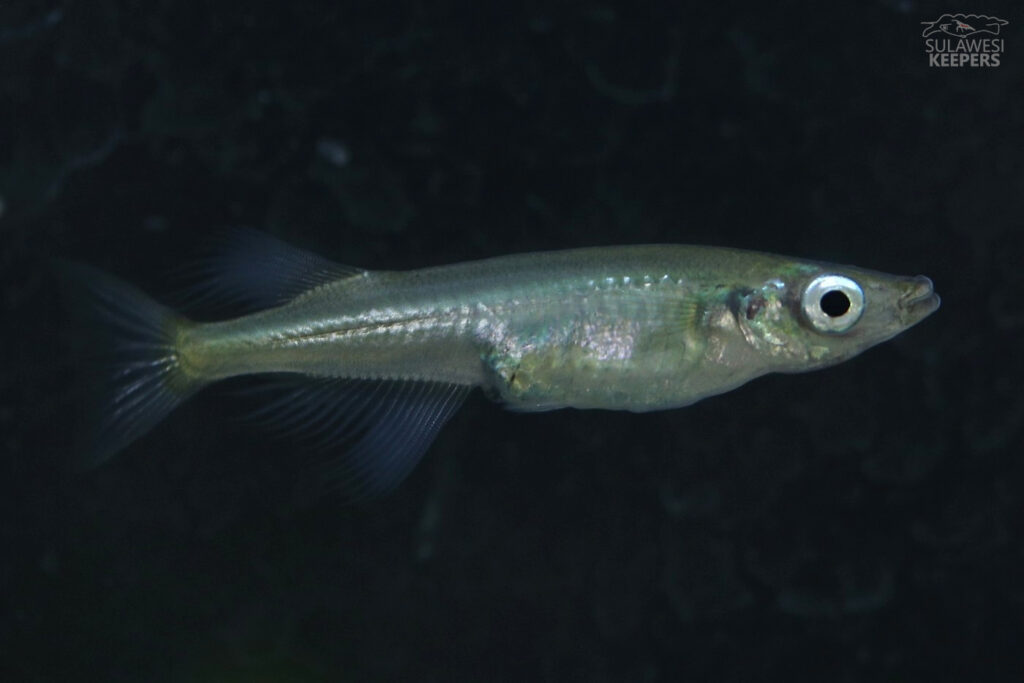
Younger females often carry only two or three eggs, while older and correspondingly larger females sometimes carry more than 15 eggs or even more. The young hatch after about 21 days at 26 °C; in cooler water, it can take a little longer.
If you have a sufficiently large group in your aquarium, you will almost always see one or more females carrying eggs. Distinguishing the sexes is very easy: males have distinctly elongated fin rays in their dorsal and anal fins, while females have greatly enlarged ventral fins for egg transport. Only after being moved to a new tank do the fish sometimes react with a reluctance to be fed for a few weeks until the first egg-carrying females are seen again. The fry can be fed very well with brine shrimp nauplii or finely powdered dry food.
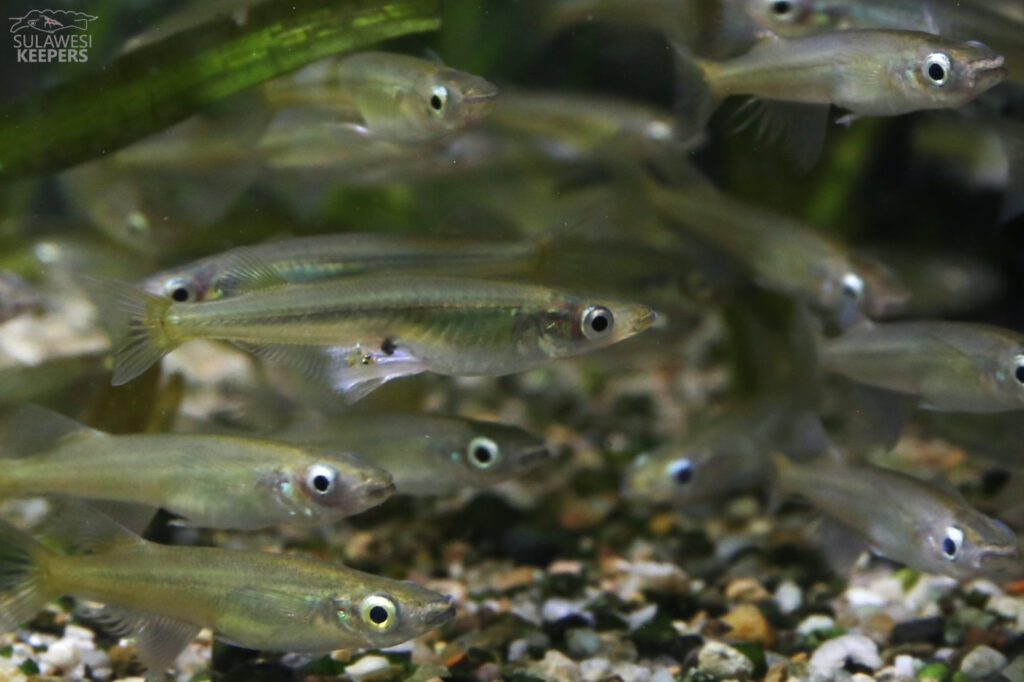
Overall, keeping and breeding O. sarasinorum is quite easy, at least for an experienced aquarist.
Gunnar Loibl