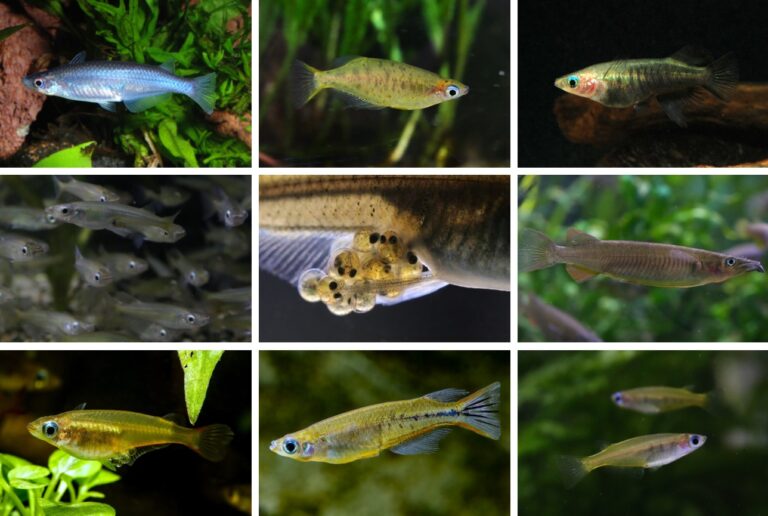
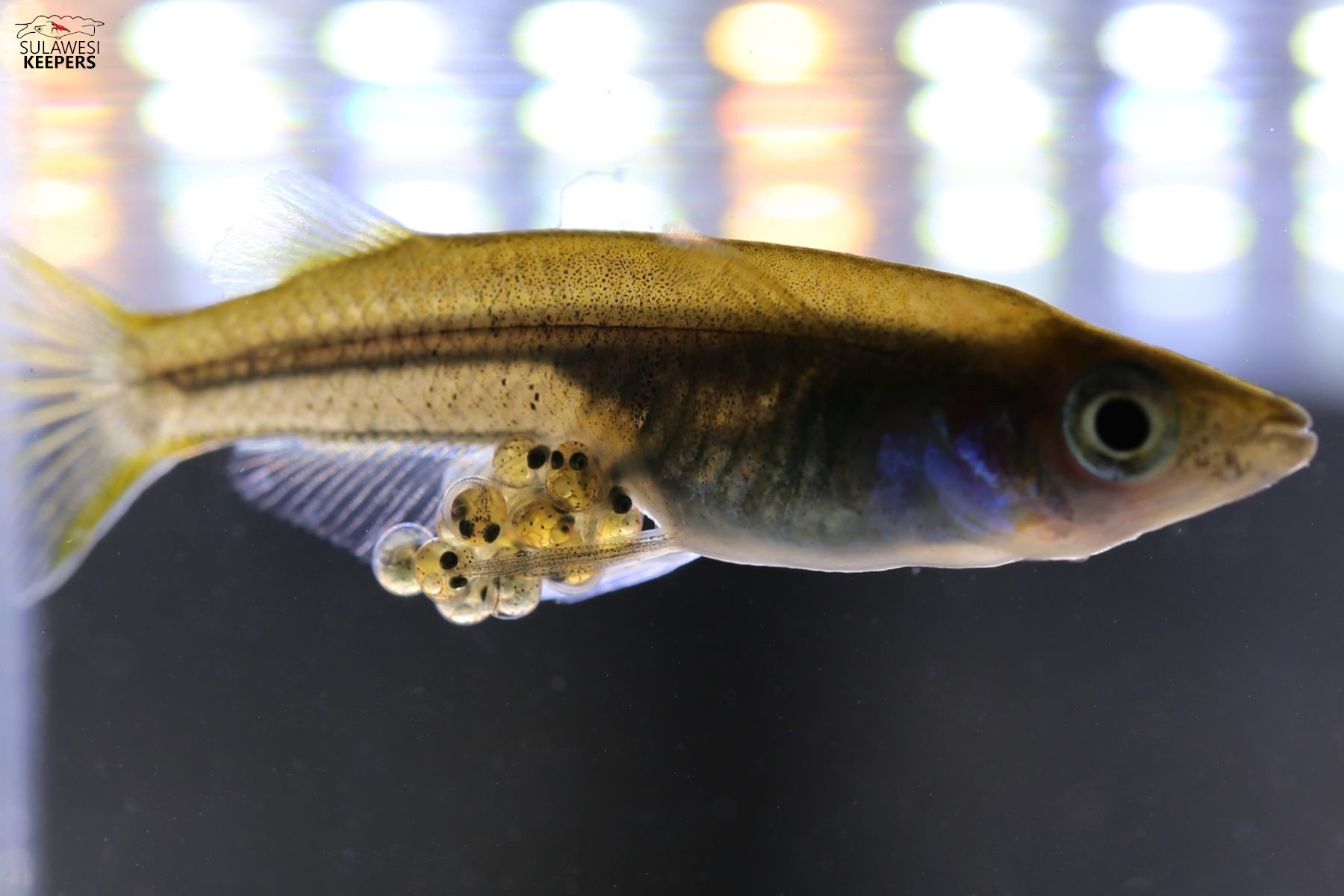
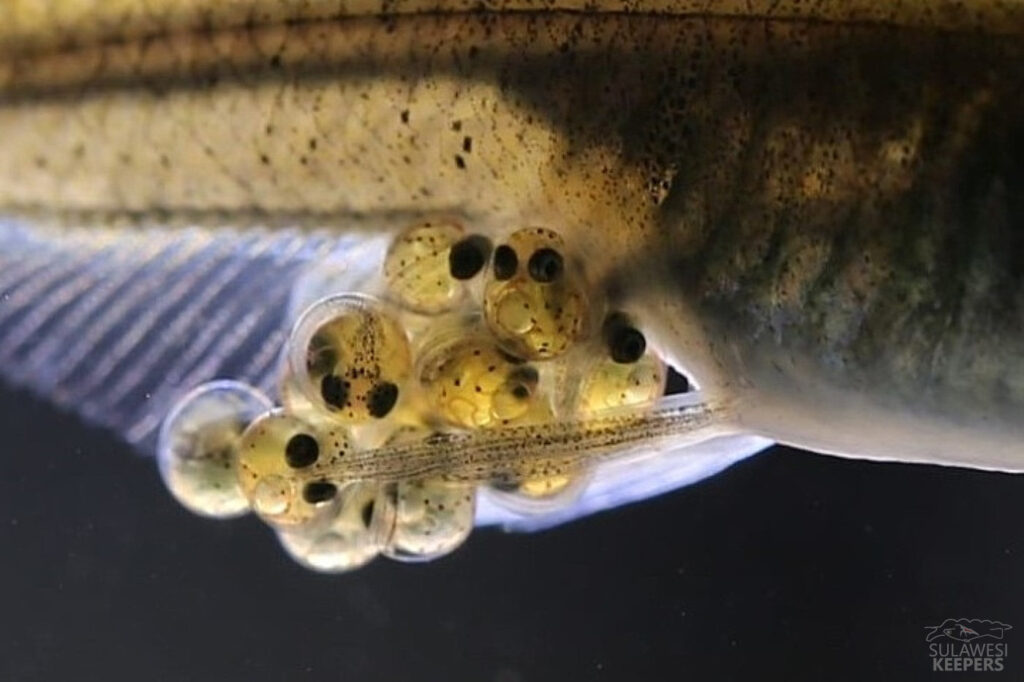
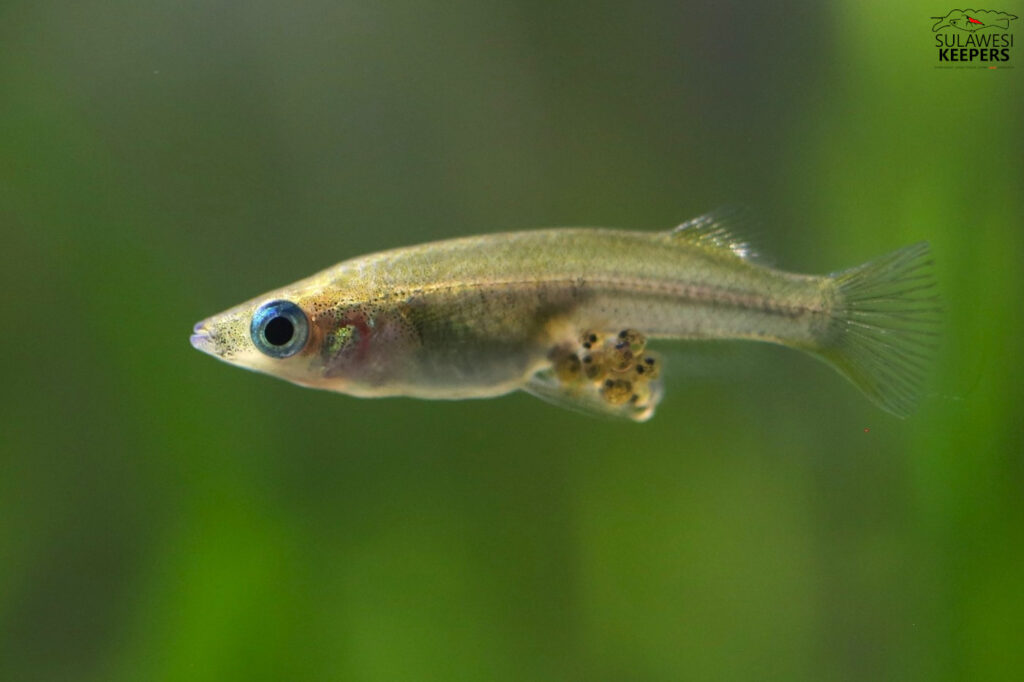
For a long time, Oryzias eversi, along with O. sarasinorum, was the only species among the Sulawesi ricefish in which the female carried the eggs with her after fertilization until the young hatched. Now, a third species, O. kalimpaaensis, has been added.
© Markéta Rejlková
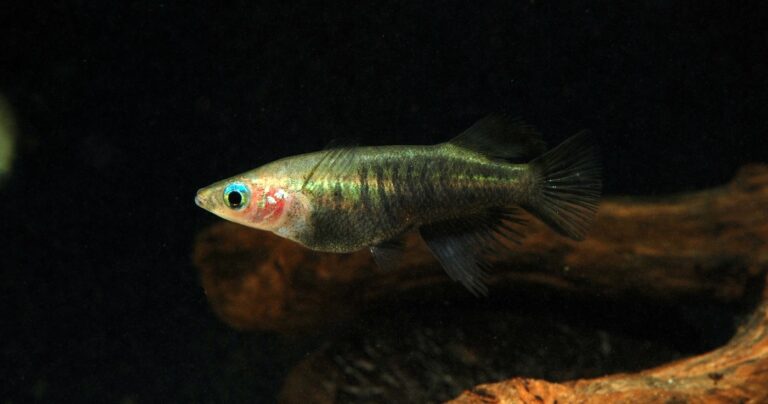
In its normal coloration, Oryzias eversi is what my wife calls a "swimming gray mouse." Courting males, on the other hand, are a real spectacle, their spread fins and deep black coloration putting many other aquarium fish to shame. I've kept this species for many years and received it in 2019 from Andreas Wagnitz, also a member of Sulawesi Keepers. Much to my wife's dismay — according to her, even my cichlids weren't colorful — I've always had a soft spot for gray fish. However, since visiting the only known location of this species on Sulawesi with Markéta Rejlková in 2023, and discovering that the water had become a bathing and washing place, obviously full of soap residue and inhabited by numerous invasive fish species, I know that I will always keep and breed this species. I doubt it still exists in its original habitat!

© Hans-Georg Evers
For ricefish, O. eversi appears quite "bulky," and the males are quite assertive, even towards larger rainbowfish species with which I have sometimes kept them. As with all ricefish, they only truly thrive in a group. However, they are not particularly active swimmers, so a small group can be kept in a 60-centimeter aquarium, though aquariums with a minimum edge length of 80 centimeters are clearly more suitable. The larger the tank, the more courting males will display their most vibrant colors. In smaller tanks, often only one male is intensely colored, while the others, even if they participate in mating, remain rather inconspicuous. Even in larger tanks, however, one can frequently observe two or three intensely colored males fighting and displaying to one another, while in a nearby area, apparently subordinate males are already taking action and mating with the females.
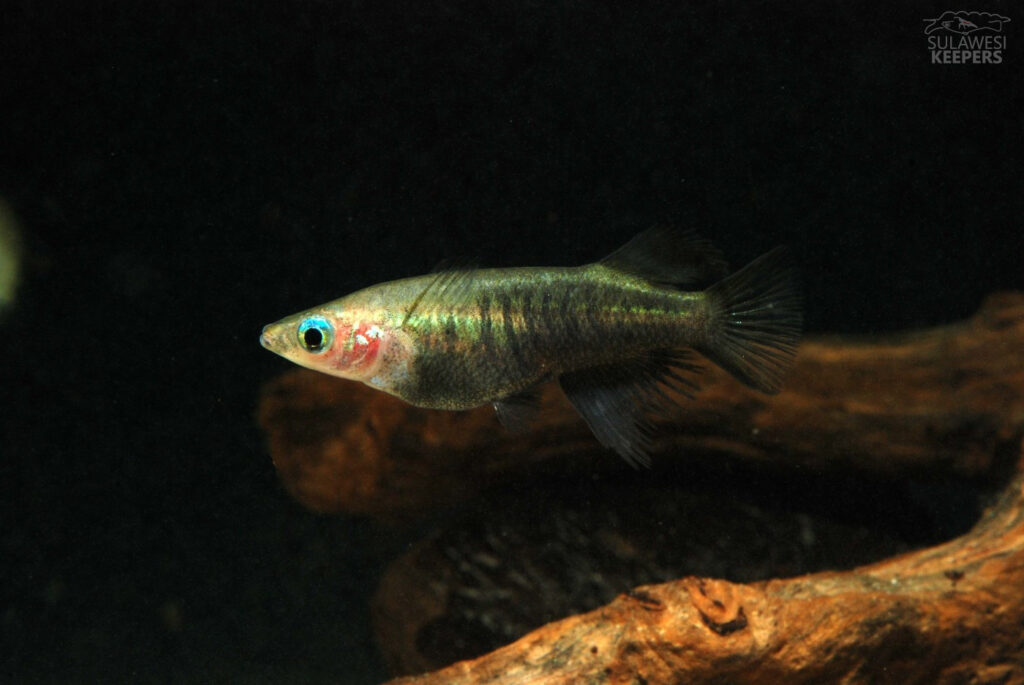
© Hans-Georg Evers
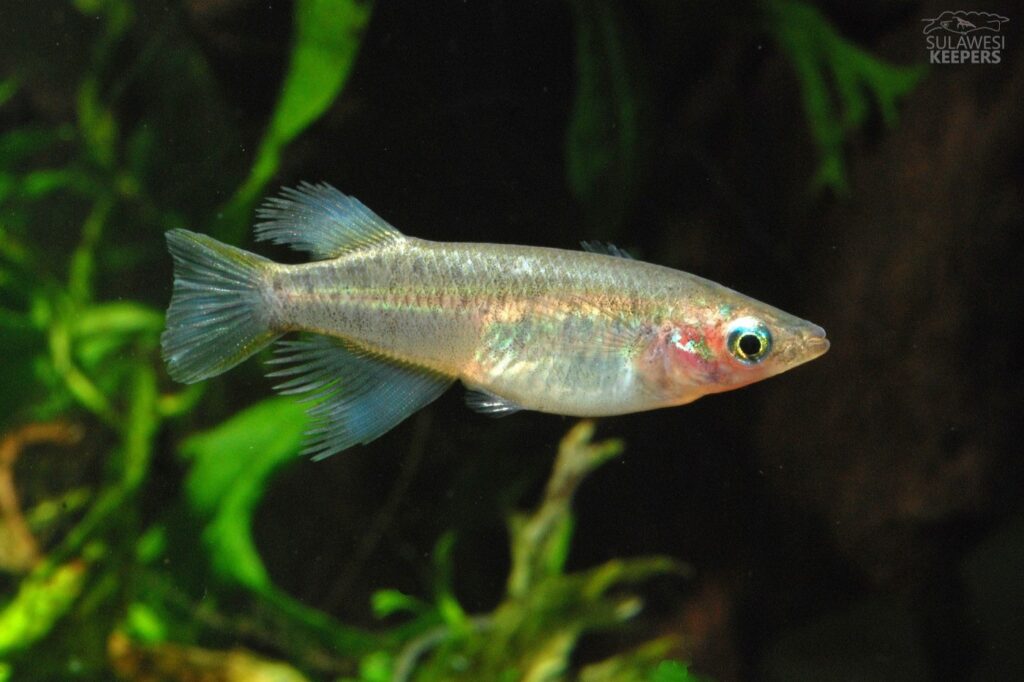
© Hans-Georg Evers
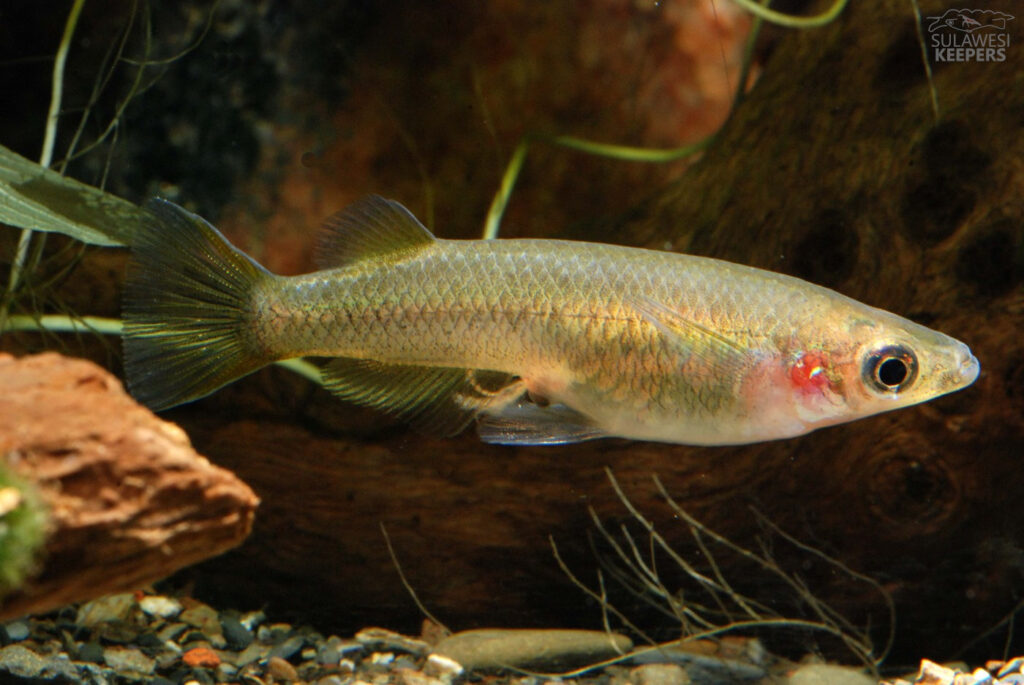
© Hans-Georg Evers
Water parameters are less critical for this species, as long as the fish are not exposed to extreme conditions. They eat anything that fits in their mouths, and this can sometimes be surprisingly large. Even sub-adult O. eversi sometimes regurgitate medium-sized mosquito larvae for so long that they often appear "puffed up" after swallowing them.
Most of the information regarding breeding also applies to Oryzias sarasinorum. However, under the same conditions, far fewer young O. eversi survive than O. sarasinorum. Although I haven't observed this directly, it seems that O. eversi prey more intensely on their offspring. Only in sufficiently large aquariums with an abundance of floating plants will a sufficient number of O. eversi offspring survive.
© Markéta Rejlková
The incubation period of the eggs is similar to that of O. sarasinorum and is temperature-dependent. After just a few days, the eyes of the fry can be clearly seen inside the eggs, and, as with O. sarasinorum, the breeder will quickly develop a good sense of when the fry will hatch. With O. eversi, the eggs can also be carefully removed from the females and transferred to a separate hatching tank. Rearing the fry is very straightforward and can be done with fine flake food and artemia nauplii.
Gunnar Loibl
Related posts:
-
Start keeping Sulawesi fish with us
You will take your hobby to the next level and become a conservationist through an activity that already entertains and fulfills you – fish keeping!
-
Conservation | Fish | Research
The pelvic-brooding ricefish Oryzias eversi – hardly known and already lost?
Oryzias eversi is one of the so-called pelvic-brooding ricefish species from Sulawesi, micro-endemic and possibly extinct in the wild.