
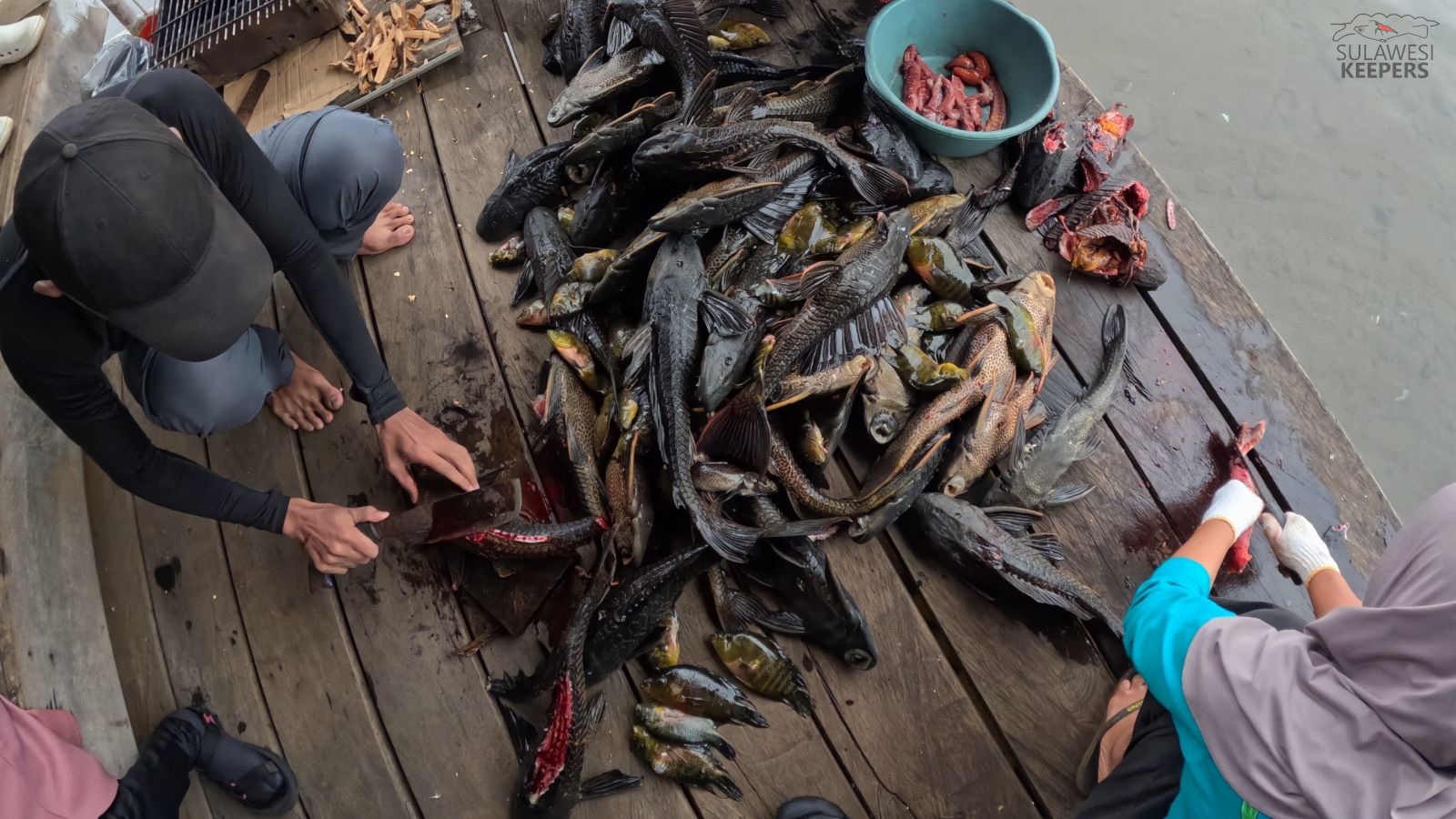
In a recent blog post, I returned to the summer meeting with partners from the Spearfishing Luwu Timur and Tarsius communities, when we discussed the possibilities of shrimp breeding directly in Lake Matano. But that was only one part of our joint activities – Tarsius prepared a much larger one. It was an explanation of the process leading from the capture of invasive fish (flowerhorns and plecos) to their processing, drying and production of pellets as poultry feed.
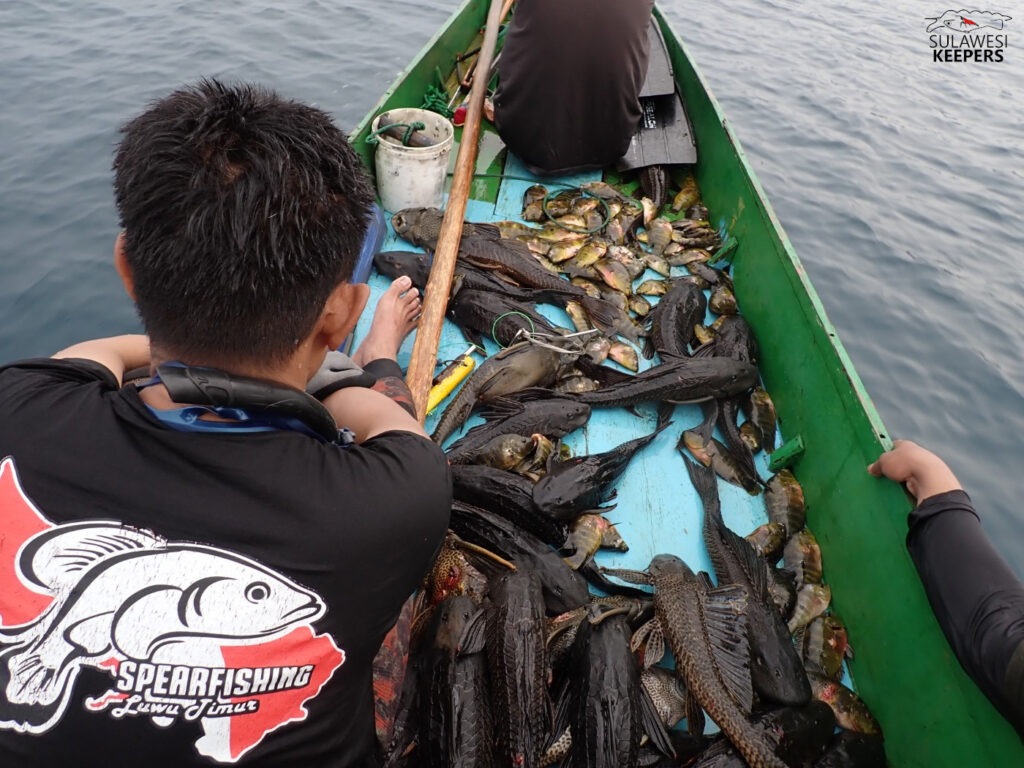
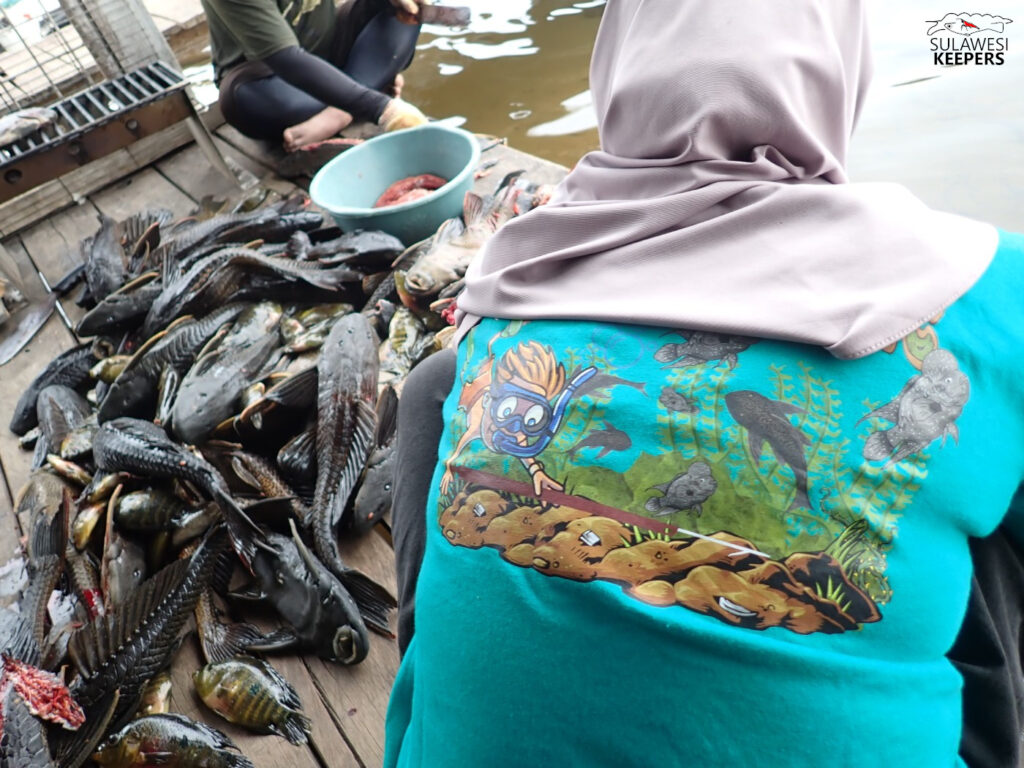
The fish catch was understandably completely directed by the local Spearfishing Luwu Timur community – this is their lake and their fight against invasive species that are decimating the unique biodiversity. These people know what to do – we went out on the lake with them in two boats and watched and documented their work.
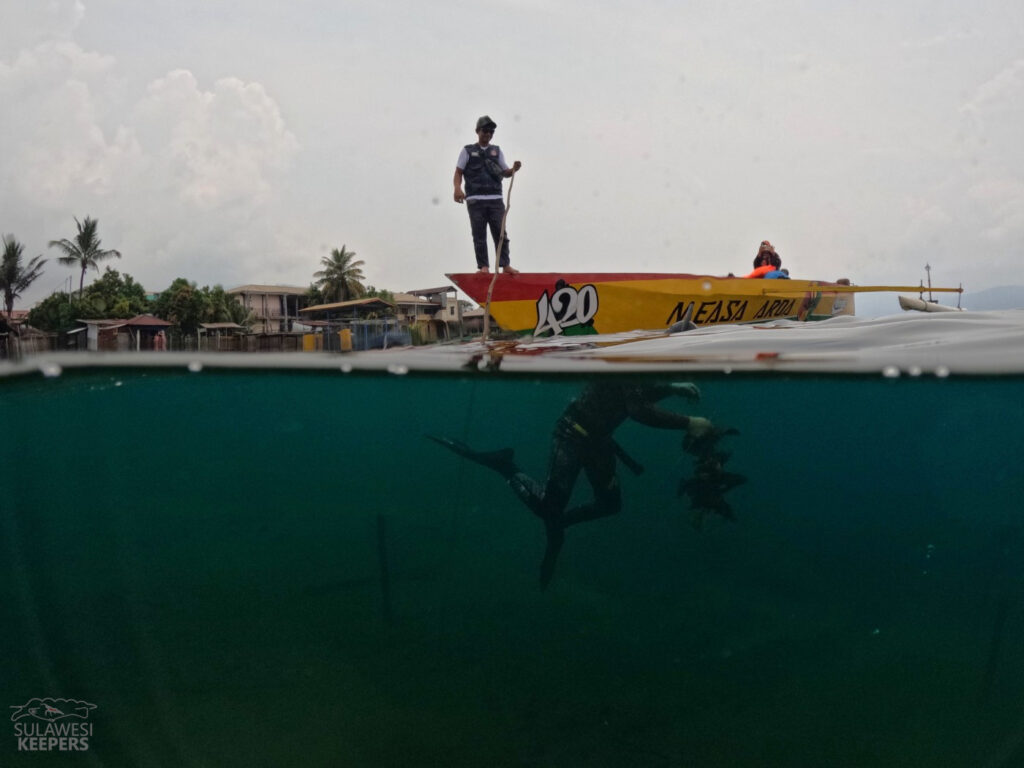
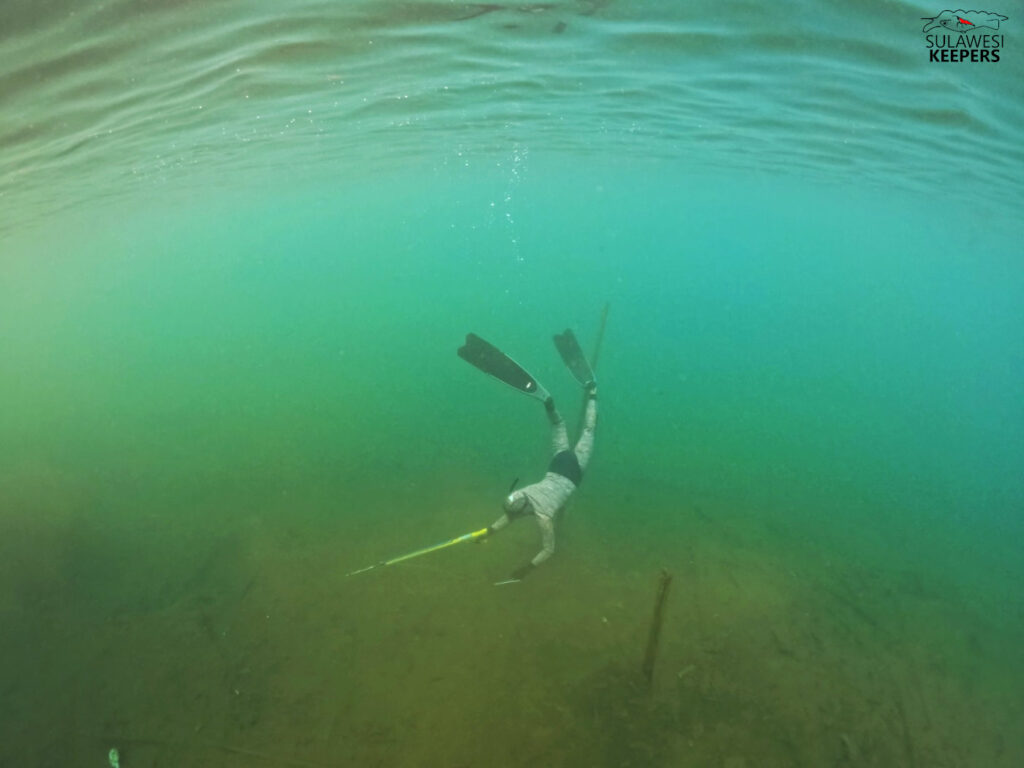
After two hours of effort, we returned to base and the catch was processed. All the heads and thick bones had to go – in the case of plecos, it was very laborious and lengthy work.
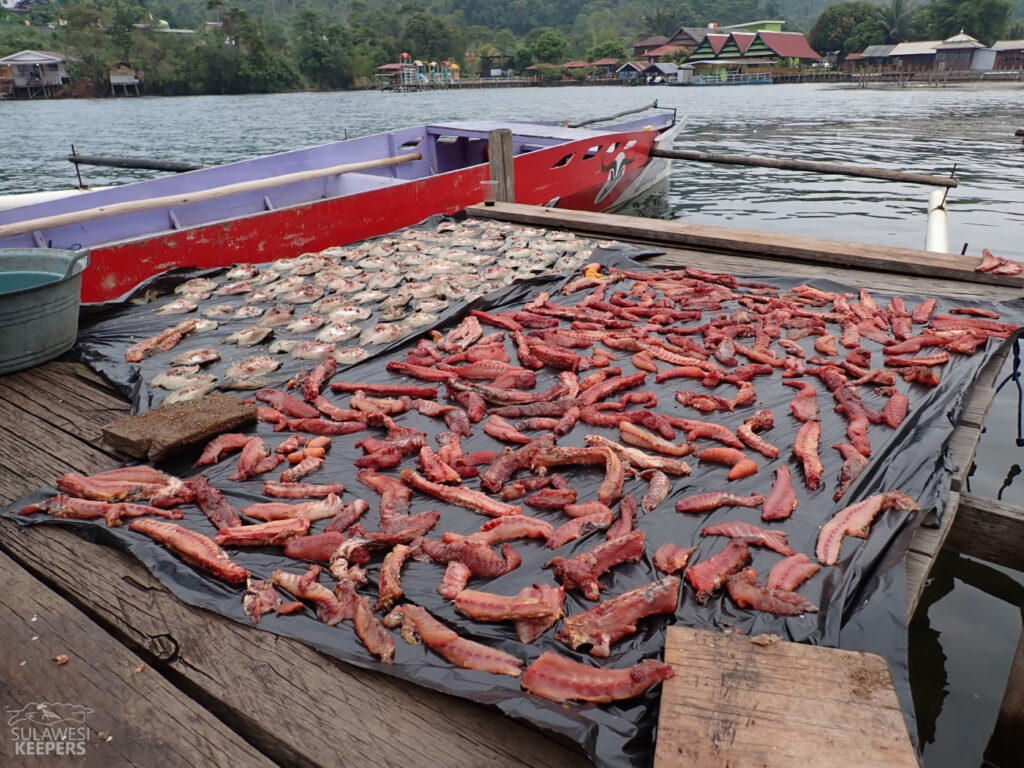
The fish were then spread out in the sun. Unfortunately, it rained for the next two days, so the material did not have time to dry properly for the final workshop. But rain is part of reality – so we also discussed the question of whether it would be necessary to purchase an oven for drying fish.
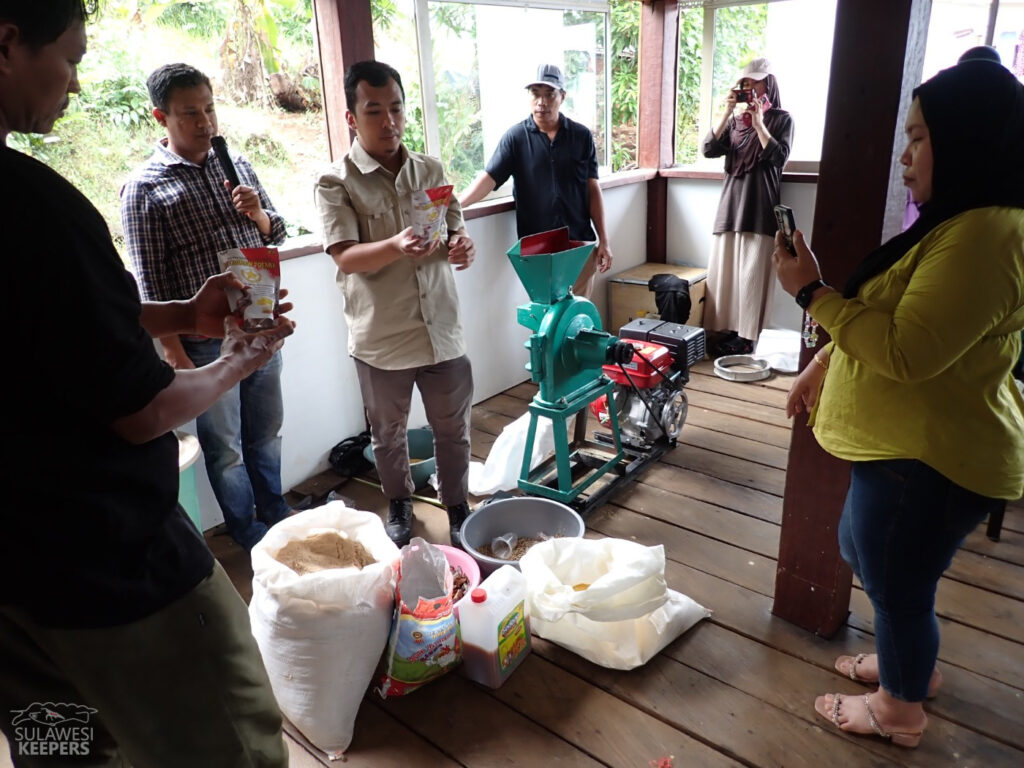
The workshop itself on fish utilization had a theoretical and practical part. Other local people and community representatives also participated. They could potentially be involved in the process in the future and thus gain a job and economic benefit from the protection of the lake.
The theoretical part was provided by two lecturers from the University of Makassar (UNHAS). The first first presented the possible uses of fish meat, the resulting choice was the production of pellets for poultry. He explained the nutritional values depending on the other materials used and the need for these additional inputs. The second lecturer spoke about the socio-economic aspect and the organization of the entire chain. The response was very positive and the possibility of producing pellets from invasive fish aroused great interest and discussion.
In the end, we witnessed the commissioning of two machines that Tarsius donated to the spearfishing community. One is used to grind dried fish and the other to create pellets from the prepared mixture. Other necessary materials were already available, so friends from the community made full-fledged pellets and distributed them to those interested.
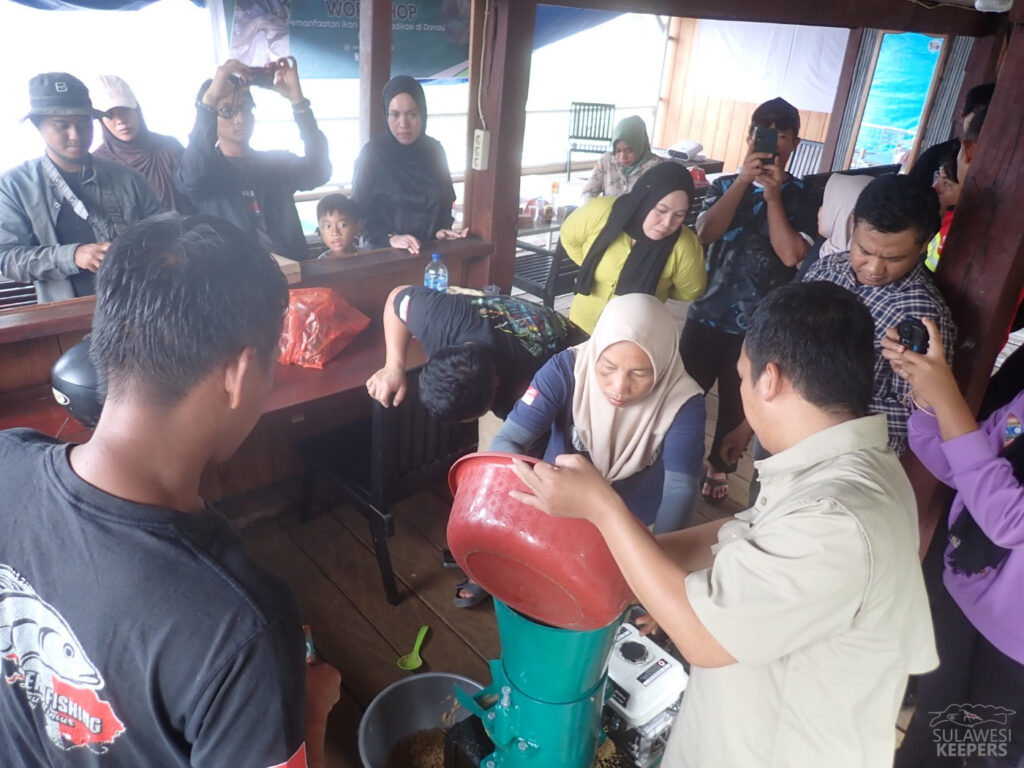
Overall, it was a very stimulating, interesting and friendly meeting with a clear outlook for the future. Tarsius received financial support from Re:Wild for this workshop and especially for a pilot project, where members of Spearfishing Luwu Timur will fish for invasive fish in predetermined locations for one year and the impact this has on local populations of invasive fish will be continuously evaluates. A year is not enough, but with financial support and the opportunity to process catches into pellets, local people can significantly intensify their activities aimed at protecting Lake Matano.
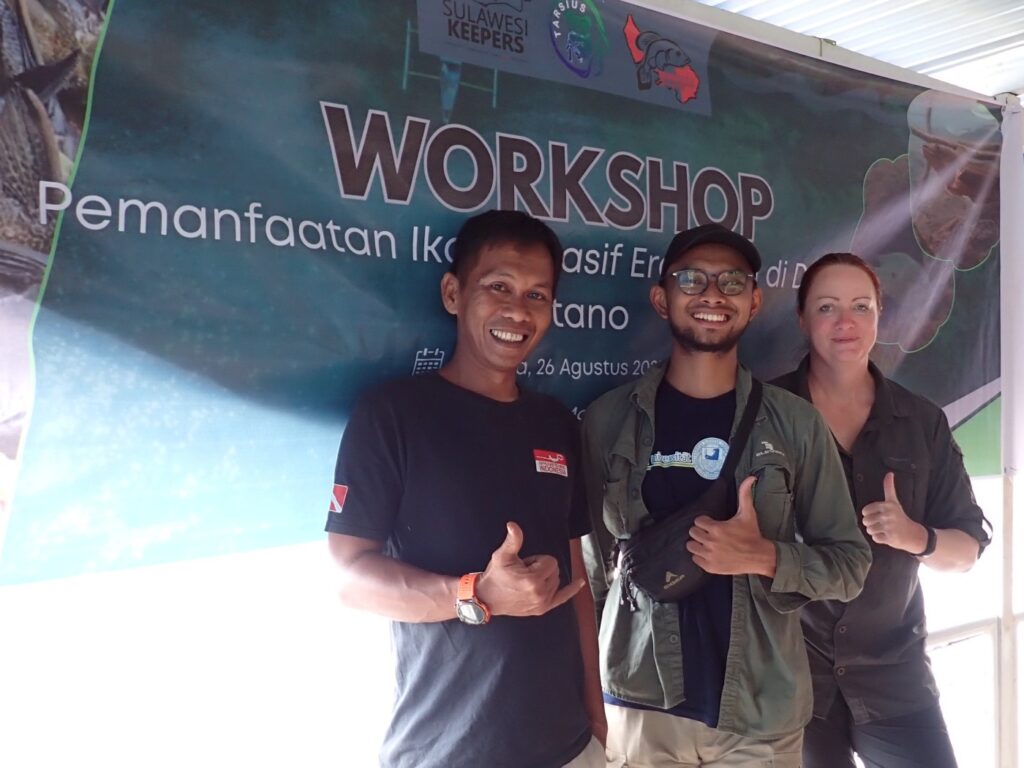
Sulawesi Keepers supported this workshop by covering the costs for two lecturers from UNHAS (transport, accommodation and salary, totalling 380 EUR). This contribution was made possible thanks to the generous support of AKWB and MEGAZOO & Friends.
Markéta Rejlková